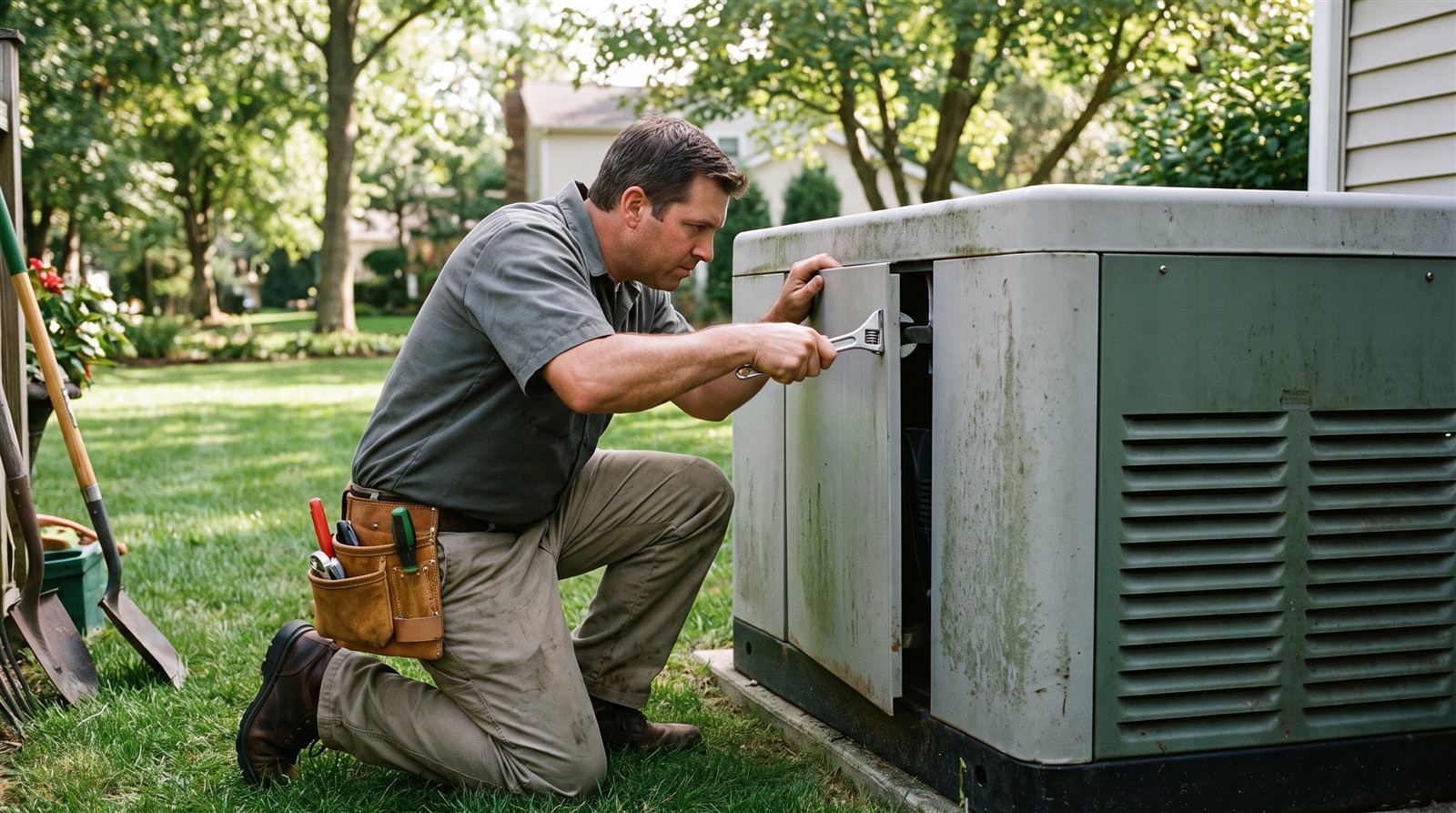
Standby generator maintenance isn’t a single task you do once a year, it’s a layered routine that combines an automatic weekly self-test, a handful of quick homeowner checks on a monthly and seasonal basis, and a professional service visit annually or after a set number of run hours. Breaking maintenance down by timeframe makes it much easier to actually keep up with, rather than treating it as one vague annual obligation that’s easy to put off. Always confirm the specific schedule and intervals in your generator’s owner’s manual, since requirements vary somewhat by manufacturer and model.
Step-by-Step Maintenance Schedule
- Weekly (automatic): confirm the generator’s built-in self-test cycle runs as scheduled, typically for 12 to 20 minutes. This usually happens automatically, but it’s worth occasionally verifying it actually occurred, either by observing it directly or checking a connected app if your model supports one.
- Monthly: do a quick visual check of the unit’s exterior for debris, vegetation growth, or nesting materials near vents and the exhaust, and glance at the control panel for any fault codes or warning indicators that may have appeared since your last check.
- Monthly: listen for any change in the sound of the weekly self-test, such as longer crank time before starting, unusual noise, or a different exhaust note than normal, since these are early indicators worth mentioning to a technician even before a full service visit.
- Quarterly: check propane tank level if applicable, and confirm natural gas shutoff valves near the unit haven’t been inadvertently closed during yard work or other maintenance.
- Seasonally (pre-storm season or pre-winter): schedule timing depends on your region’s risk profile; homeowners in hurricane-prone areas often prioritize service in spring before storm season, while those in cold climates focus on pre-winter checks like battery and block heater verification.
- Annually: schedule a full professional service visit, which typically includes an oil and filter change, air filter inspection, spark plug or valve check depending on engine type, battery load test, and a load-bank test confirming the unit can carry your home’s actual demand.
- Annually or per manufacturer run-hour interval: some manufacturers specify maintenance intervals by total run hours rather than strictly by calendar time, particularly relevant if you’ve had multiple or extended outages in a given year that add up to significant runtime.
- Every few years (model-dependent): certain components, such as the battery itself, may need full replacement rather than just testing, depending on age and condition assessed during annual visits. Your technician will typically flag this rather than it being something on a fixed calendar.
What Homeowners Can Reasonably Do Themselves
The monthly and quarterly checks above are largely visual and observational: looking for debris, listening for unusual sounds, checking a fuel gauge or app notification, and noting anything that seems different from normal. These don’t require opening panels, touching electrical components, or working on the fuel system. If you notice something during these checks, the appropriate next step is contacting your service provider, not attempting a repair.
What Should Always Go to a Professional
Oil changes, battery testing and replacement, load-bank testing, spark plug or valve service, and anything involving the fuel system, transfer switch, or control board wiring should be handled by a qualified technician. Standby generators combine fuel handling, an internal combustion engine, and electrical connections tied directly into your home’s panel, and working on these systems without proper training and equipment carries real safety risk, both to you and to the reliability of the unit.
Building a Schedule Around Your Region’s Risk Profile
While the core maintenance tasks are similar everywhere, timing an annual service visit around your regional risk profile makes practical sense. Homeowners along the Gulf Coast and hurricane-prone Atlantic states often schedule their annual visit in spring, ahead of hurricane season, so any issues found have time to be resolved before the period they’re most likely to need the generator. Homeowners in regions with severe winter storms or extended cold snaps may prioritize a fall visit instead, focused on cold-weather readiness. There’s no single correct calendar month; the goal is simply to have your service completed before your region’s highest-risk season begins, rather than waiting for a manufacturer-suggested date that might land in the middle of it.
Keeping Records
Keeping a simple log of service dates, what was done, and any fault codes observed between visits helps a technician diagnose issues faster and gives you a clear picture of the unit’s history, which also matters if you ever sell the home or need to reference the maintenance record for a warranty claim. Many service companies maintain this record for you, but keeping your own copy is a reasonable habit regardless.
Key Takeaways
- Maintenance happens on multiple timeframes: an automatic weekly self-test, homeowner visual checks monthly and quarterly, and a professional visit annually.
- Homeowner-level checks are visual and observational; oil, battery, fuel system, and electrical work should always go to a qualified technician.
- Time your annual professional service ahead of your region’s highest-risk season (spring for hurricane-prone areas, fall for severe-winter regions).
- Some manufacturers specify maintenance by run-hours rather than strictly by calendar date, which matters if you’ve had a lot of outage runtime in a given year.
- Keeping a simple maintenance log helps with diagnosis, warranty claims, and home resale.
Frequently Asked Questions
How often does a standby generator really need professional service?
Most manufacturers recommend a full professional service visit once a year, though some specify intervals by total run hours instead. Check your specific owner’s manual, since requirements vary by model.
What’s the difference between the weekly self-test and the annual service visit?
The weekly self-test is a short, unloaded run cycle that confirms the engine starts, mainly to keep components exercised and catch obvious problems early. The annual service visit is a full inspection that includes an oil change, battery load test, and a load-bank test that verifies the generator can actually carry your home’s real electrical demand, which the self-test doesn’t check.
Can I do the annual maintenance myself to save money?
Basic visual and observational checks are fine for a homeowner, but the annual service involves oil changes, battery testing, and load-bank testing that require training and equipment most homeowners don’t have. Attempting this yourself risks both your safety and the generator’s reliability.
What should I do if I notice a fault code between scheduled visits?
Note the exact code and contact your service provider rather than waiting for your next scheduled visit. Many fault codes indicate a developing issue that’s easier and cheaper to address early than after it causes a failure to start.
Does a generator that ran during several outages last year need extra maintenance?
Possibly. If your manufacturer specifies maintenance intervals by run hours, significant outage runtime in a given year could mean your unit is due for service sooner than the standard annual calendar date. Check your run-hour total, often visible on the control panel, against your manufacturer’s guidance.