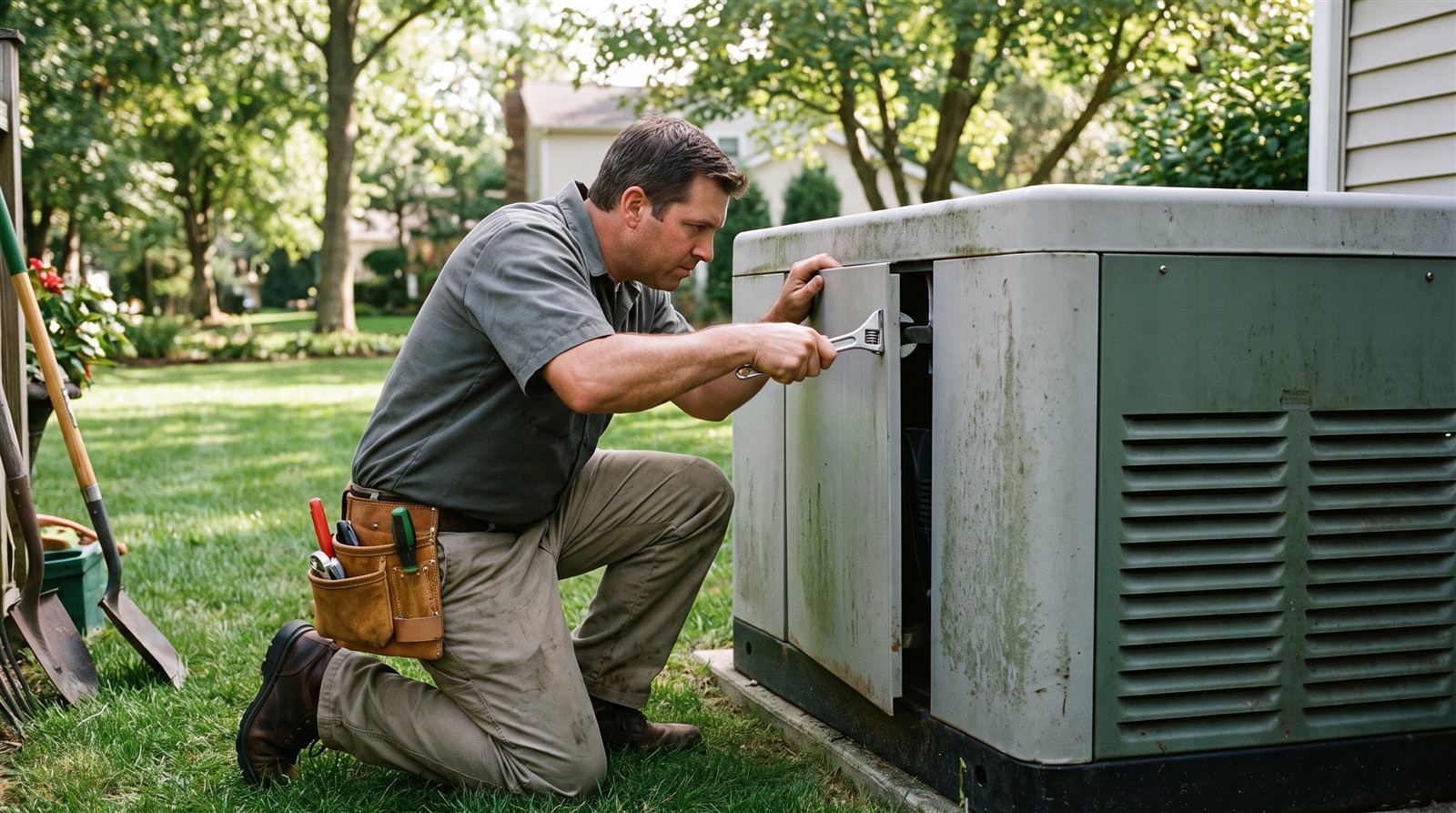
How long a standby generator can run on a propane tank depends on two variables that homeowners often underestimate: the size of the tank and how much electrical load the generator is actually carrying at any given moment. A generator running your essential circuits at partial load will stretch a tank considerably further than the same unit running your entire home at near-full capacity, which means there is no single “hours per tank” answer that applies to every household — only a set of factors you can use to estimate your own runtime.
Common Residential Propane Tank Sizes
Residential propane tanks typically come in a handful of standard sizes, most commonly 100-gallon, 250-gallon, 500-gallon, and occasionally 1,000-gallon tanks for larger properties or homes that also use propane for heating, cooking, or water heating in addition to backup power. It’s worth noting that a propane tank is never filled completely; suppliers typically fill tanks to about 80% of stated capacity to allow for fuel expansion, so a “500-gallon” tank realistically holds around 400 gallons of usable propane.
If your propane tank is shared between the generator and other household appliances like a furnace or stove, your generator’s available runtime during an outage is also affected by how much of that shared supply gets used by those other appliances while the power is out, particularly in winter when heating demand is highest.
The Real Driver: Load, Not Just Tank Size
A generator’s fuel consumption rate scales with the electrical load it’s carrying, not just its maximum rated output. A generator sized to power an entire home will burn noticeably more propane per hour when it’s actually carrying that full load — air conditioning, water heater, appliances, and electronics all running simultaneously — than it will when carrying just a handful of essential circuits like refrigeration, some lighting, and a sump pump.
This is why two households with an identical generator and an identical tank size can see meaningfully different runtimes during a real outage: one runs the whole house at high load and burns through fuel faster, while the other runs a curated set of essential circuits and stretches the same tank much longer. If extending runtime during a long outage is a priority, being deliberate about what you actually run, rather than defaulting to full-house operation the entire time, is one of the most effective levers a homeowner has.
Estimating Your Own Runtime
Manufacturers publish fuel consumption charts for their generator models, usually expressed as gallons per hour at different load percentages (commonly 25%, 50%, 75%, and 100% of rated capacity). To get a realistic estimate for your situation:
- Find your generator’s fuel consumption rate at roughly the load level you expect to run during a typical outage, not necessarily its full rated capacity.
- Multiply that hourly consumption rate by the number of hours you want to plan for (24 hours, 72 hours, a week, etc.) to see the total gallons needed.
- Compare that figure to your tank’s usable capacity (roughly 80% of the stated tank size) to see how many hours of runtime you can realistically expect from a full tank.
Note: exact fuel consumption rates vary by generator model, engine design, and manufacturer. Always check your specific unit’s fuel consumption chart in its owner’s manual rather than relying on a general estimate.
Why Tank Level Monitoring Matters
Unlike a natural gas hookup, which draws from a continuous utility supply, a propane system only has as much fuel as is physically in the tank at the time the outage begins. This makes tank level monitoring an important part of ongoing generator ownership, not just something to think about once a storm is already forecast. Many propane suppliers offer tank monitors that report fuel level remotely, and some generator manufacturers integrate low-fuel alerts into their control panels or connected apps.
Homeowners in hurricane-prone or severe-winter-storm regions often keep their tank topped off well above the point they’d normally reorder, specifically because delivery trucks can be delayed or fully booked in the days immediately before and after a major storm, when many customers in the same region are requesting refills at once.
What Happens If the Tank Runs Empty Mid-Outage
If a propane-fired standby generator runs out of fuel, it simply shuts down, the same as any engine running out of gas. It is not a mechanical failure and won’t damage the unit, but it does mean your home loses backup power exactly when you need it most. Restoring service requires a tank refill from a supplier, which is why proactive monitoring, rather than waiting for a low-fuel warning during an actual outage, is the better approach for anyone relying on propane for extended backup power.
Key Takeaways
- Runtime on a propane tank depends on both tank size and how much electrical load the generator is carrying, not tank size alone.
- Tanks are typically filled to about 80% of stated capacity, so a “500-gallon” tank holds roughly 400 usable gallons.
- Running only essential circuits instead of the full house meaningfully extends how long a tank will last during an outage.
- Manufacturer fuel consumption charts, matched to your expected load level, give the most accurate runtime estimate for your specific generator.
- Proactive tank level monitoring is especially important ahead of forecasted major storms, when refill deliveries can be delayed.
Frequently Asked Questions
How many gallons of propane does a whole-house generator use per hour?
It varies significantly by generator size and load level, generally ranging from a couple of gallons per hour at partial load on smaller units to considerably more per hour on larger generators running near full capacity. Check your specific model’s fuel consumption chart in the owner’s manual for an accurate figure.
Will a 500-gallon propane tank last through a week-long outage?
It depends entirely on your generator’s size and how much load you run. A generator running only essential circuits can often stretch a large tank across many days, while a generator running full-house loads continuously will consume fuel much faster. Use your model’s fuel consumption chart to estimate your specific scenario.
Should I dedicate a separate propane tank just for my generator?
Some homeowners do this specifically so that heating, cooking, or water heating usage doesn’t compete with generator fuel during an outage. It’s a reasonable option to discuss with your installer and propane supplier, particularly in colder climates where heating demand is significant during winter outages.
Can I run my generator at a lower capacity to save propane?
Standby generators typically manage their own output automatically based on the electrical load actually being drawn by your home, rather than something you manually throttle. The practical way to reduce fuel consumption is to reduce the load itself, for example by running fewer non-essential circuits during an extended outage.
How do I know when my propane tank is getting low during an outage?
Many generator control panels and connected apps display fuel level or provide low-fuel alerts, and propane tanks often have a simple gauge on the tank itself. If your setup doesn’t have remote monitoring, periodically checking the tank gauge during an extended outage is a reasonable habit.