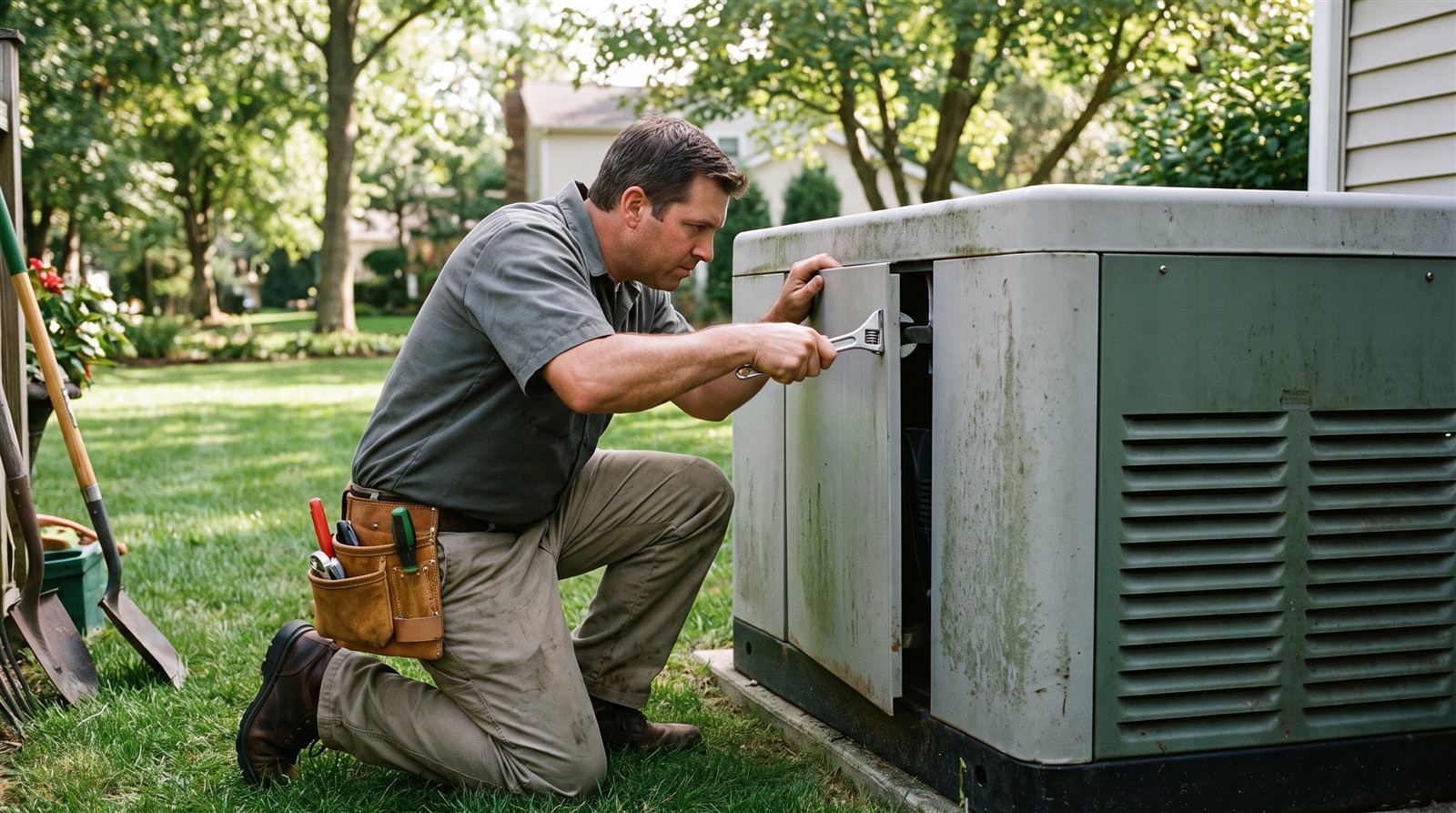
A whole-house standby generator is only as reliable as the maintenance behind it, and the single most important habit is running it regularly, not just when the power goes out. Most standby generators are programmed to run a short self-test automatically once a week, typically for 12 to 20 minutes, and that built-in cycle is the backbone of a maintenance routine that also includes annual professional service, seasonal checks, and periodic fuel system inspection. Understanding how these pieces fit together is the difference between a generator that starts reliably during a storm and one that fails silently for months before anyone notices.
Why Regular Running Matters More Than People Think
An engine that sits unused for long stretches develops problems that have nothing to do with age. Gaskets and seals dry out, battery charge drains, small amounts of condensation accumulate in the fuel system, and lubricating oil settles away from critical engine surfaces. Running the generator regularly keeps oil circulating, keeps the battery topped off, and gives the control board a chance to detect and report developing faults before they turn into a failure to start.
This is why nearly every standby generator sold in the last two decades ships with an automatic exercise feature already built into its controller. Homeowners do not need to remember to start the unit manually; the generator handles it on its own schedule, and its job is simply to confirm that the cycle is actually completing and to notice if something seems off, like unusual noise, smoke, or an error code on the control panel.
The Weekly Self-Test Cycle
Out of the box, most standby generators are set to run a self-test once a week, on a day and time you can typically customize through the control panel or a connected mobile app. During this cycle, the engine starts, runs at operating speed for a short period, and shuts back down without transferring your home’s electrical load onto generator power (this is sometimes called an “unloaded” exercise cycle, as opposed to the full test with a load bank that a technician might perform annually).
It’s worth periodically confirming that this cycle is actually happening rather than assuming it is. A dead starting battery, a closed fuel valve, or a tripped breaker on the generator’s own circuit can silence the weekly test without triggering an obvious alarm in every model. Walking outside briefly on the scheduled test day, or checking the app if your unit is connected, takes only a moment and confirms the system is doing what it’s supposed to.
Annual and Seasonal Maintenance Beyond the Self-Test
The weekly exercise cycle is not a substitute for professional maintenance. Most manufacturers recommend a full service visit once a year, or after a certain number of run hours, whichever comes first. A typical annual visit includes an oil and filter change, air filter inspection, spark plug or valve check depending on the engine, a battery load test, and a full load-bank test that verifies the unit can actually carry your home’s electrical demand, not just start and idle.
Seasonal timing matters too. Many homeowners in hurricane-prone or wildfire-prone regions schedule service in late spring, ahead of the season when they are most likely to need the generator, rather than waiting for a manufacturer-suggested date that might fall in the middle of storm season. Cold-climate owners also have winter-specific steps, like verifying block heater operation and confirming the enclosure’s cold-weather kit is functioning, that fall outside a standard annual tune-up.
How Fuel Type Affects Your Maintenance Rhythm
The fuel your generator runs on has a real effect on maintenance frequency and cost. Natural gas units draw from a continuous utility supply, so fuel freshness is not a concern, but the gas train and regulator still need periodic inspection. Propane systems depend on tank level monitoring, since a generator that runs out of propane mid-outage is not a mechanical failure but a supply oversight; many owners set up tank-level alerts or float gauges for this reason. Diesel standby units, less common in residential settings but still used on larger properties, need more attention to fuel stability, since diesel can degrade in storage over many months and may benefit from a fuel stabilizer or periodic fuel polishing on units that run infrequently.
Recognizing When Something Needs Attention
Between scheduled service visits, a generator will often signal a developing problem well before it fails outright. Warning signs include the weekly self-test taking longer than usual to start, visible smoke beyond a brief puff at startup, a fault code on the control panel, unusual vibration, or a noticeably louder exhaust note than normal. None of these symptoms mean you need to attempt a repair yourself; standby generators combine fuel systems, high-voltage electrical components, and in many cases an automatic transfer switch tied directly into your home’s panel, all of which are best left to a qualified technician.
How Maintenance Habits Affect Long-Term Lifespan
A standby generator that receives consistent exercise cycles and annual service can reasonably be expected to last well beyond a decade of typical residential use, while a neglected unit — one that sits through skipped self-tests, delayed oil changes, and ignored fault codes — tends to fail earlier and often at the worst possible moment, during the very outage it was bought to handle. Maintenance is not just about avoiding repair bills; it’s about making sure the equipment performs its one job when you actually need it.
Key Takeaways
- Most standby generators self-test automatically once a week for 12 to 20 minutes; confirm this cycle is actually running rather than assuming it is.
- Annual professional service, including a load-bank test, oil change, and battery check, is necessary in addition to the weekly self-test.
- Fuel type (natural gas, propane, or diesel) changes what you need to monitor between service visits.
- Warning signs like slow starts, smoke, fault codes, or unusual noise deserve prompt professional attention rather than a wait-and-see approach.
- Consistent maintenance is the biggest factor separating a generator that reliably starts during an outage from one that fails when it matters most.
Frequently Asked Questions
How long should the weekly self-test run?
Most standby generators run their factory-programmed self-test for 12 to 20 minutes, though the exact duration and day/time are usually adjustable through the control panel or a connected app. Check your owner’s manual for your specific model’s default settings.
Can I skip the annual professional service if the weekly self-tests are working fine?
It’s not recommended. The self-test confirms the engine starts and runs briefly unloaded, but it does not verify the unit can carry your home’s full electrical load, check oil condition, or catch developing issues in the fuel system or battery that only a full service visit typically identifies.
Does a generator that runs on natural gas need less maintenance than a propane or diesel unit?
The core engine maintenance is similar across fuel types, but natural gas removes the fuel-supply monitoring that propane and diesel owners need to manage. Propane owners should track tank levels, and diesel owners should pay closer attention to fuel storage stability, especially on units that run infrequently.
What should I do if my generator’s weekly self-test suddenly stops happening?
Check the obvious things first, like whether a breaker tripped or the fuel supply valve is open, and check the control panel for a fault code. If the unit still won’t complete its test cycle, contact a qualified technician rather than troubleshooting the engine or electrical components yourself.
Is it normal for a standby generator to smoke a little when it starts?
A brief puff of smoke at startup, especially in cold weather, is common and generally not a concern. Continuous smoke, dark or thick smoke, or smoke accompanied by unusual smells or sounds is not normal and warrants a call to a professional.