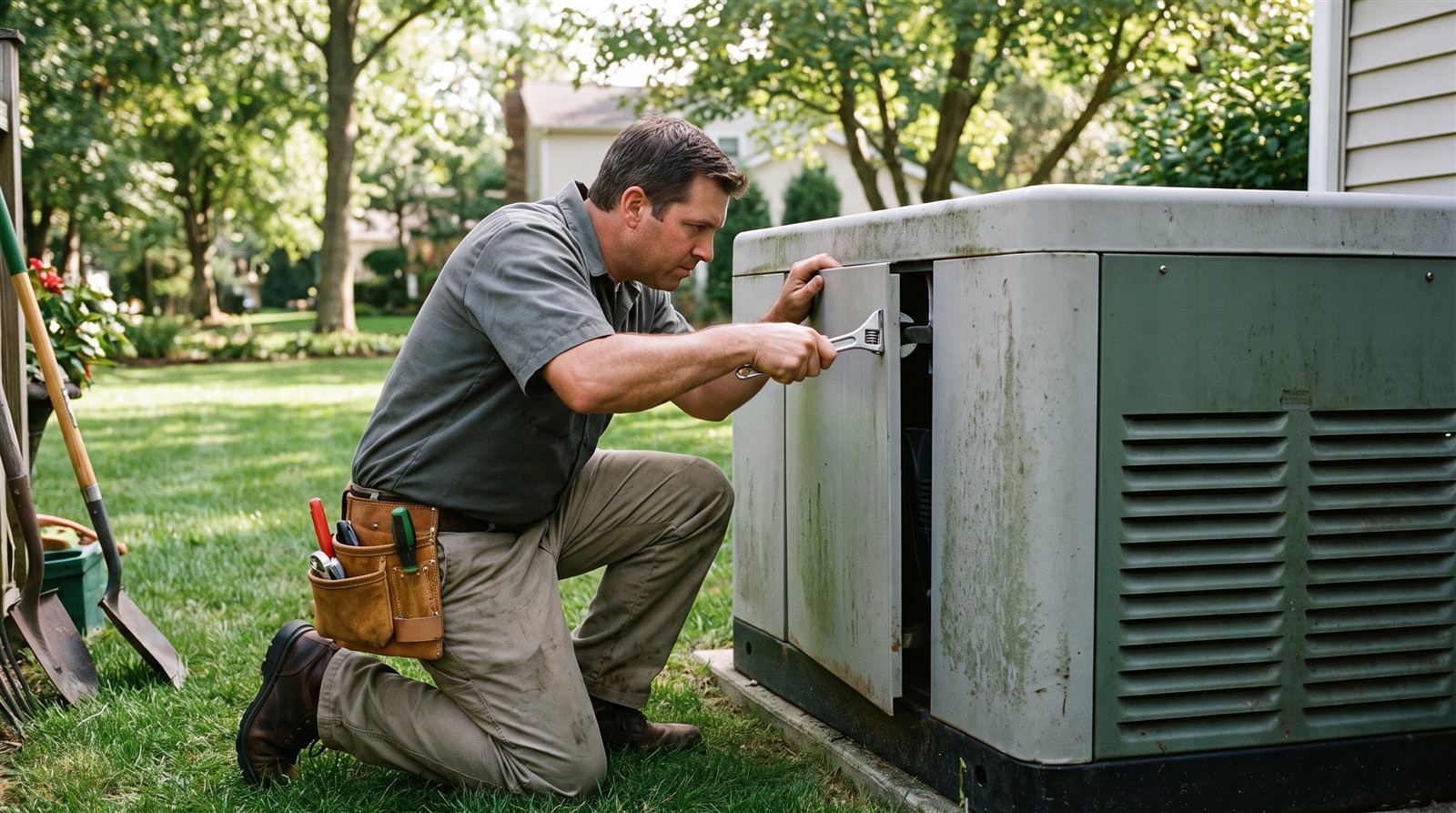
Noise is one of the most common concerns homeowners raise before buying a whole-house standby generator, especially in suburban neighborhoods with close-set homes or homeowner associations with noise restrictions. Generally speaking, residential standby generators run considerably quieter than the portable generators most people are used to hearing, but there’s still real variation between models, and understanding what drives that variation helps you compare units more meaningfully than a single decibel number on a spec sheet.
Why Decibel Numbers Can Be Misleading
Decibels are measured on a logarithmic scale, meaning a jump of even a few decibels represents a much larger difference in perceived loudness than the numbers alone suggest. A generator rated at 65 decibels is meaningfully quieter than one rated at 70, not just “5 units” quieter. It’s also important to check what distance a manufacturer’s decibel rating was measured at, since the same generator will read louder at 7 feet than at 23 feet, and manufacturers don’t always use the same measurement distance when publishing specs, which makes side-by-side comparisons tricky unless you check the fine print.
For a general sense of scale, a normal conversation registers around 60 decibels, a running dishwasher is roughly similar, and a lawnmower or garbage disposal runs meaningfully louder. Most whole-house standby generators, at a typical rated measurement distance, fall in a range that’s louder than a quiet conversation but well below a lawnmower running at close range.
What Actually Drives Noise Differences Between Models
Several factors influence how loud a specific generator is in practice, often more than the brand name itself:
- Engine size and load: larger generators sized to run an entire home typically produce more noise than smaller units sized for essential circuits only, particularly under higher load.
- Enclosure design: sound-dampening enclosure materials and design vary between manufacturers and even between product lines from the same manufacturer, and this is often where premium models differentiate themselves from base models.
- Distance and placement: how far the unit sits from your home, from a neighbor’s property line, and from any sound-reflecting surfaces like a fence or wall meaningfully affects perceived noise at any given listening point.
- RPM (engine speed): some generator engines run at higher RPM than others to produce the same power output, and higher-RPM engines are generally perceived as louder and higher-pitched than lower-RPM designs.
- Load level: a generator running near its full rated capacity typically runs louder than the same unit running a lighter load, similar to how a car engine sounds different at highway speed versus idling.
Comparing Manufacturer Noise Ratings
When comparing decibel specs across generator brands and models, look specifically for the measurement distance used, since a rating taken at a longer distance will naturally look quieter than the same unit measured closer in. It’s also worth asking your installer whether they’ve heard the specific model running in person, since real-world impressions, especially at your actual planned installation distance from windows and outdoor living spaces, are often more useful than comparing spec-sheet numbers between brands.
| Noise Level Context | Approximate Reference |
|---|---|
| Quiet conversation | ~60 dB |
| Running dishwasher | ~60-65 dB |
| Typical whole-house standby generator (at rated distance) | Louder than conversation, quieter than a lawnmower |
| Lawnmower at close range | ~85-90 dB |
Note: exact decibel specifications vary by manufacturer, model, and measurement distance. Always check the specific rating and test distance published for the model you’re considering, and confirm it against local noise ordinance limits if your area has them.
Local Noise Ordinances and HOA Rules
Some municipalities and homeowner associations set specific noise limits or restrict where generators can be installed relative to property lines, sometimes independent of general building setback requirements. Before finalizing a generator purchase and installation plan, it’s worth checking with your local building department and, if applicable, your HOA, about any noise-related restrictions that could affect model selection or placement. This is especially relevant if your property sits close to a neighboring home or in a community with an active HOA noise policy.
Ways to Reduce Perceived Noise
If noise is a significant concern, a few practical options can help beyond simply choosing a quieter-rated model. Placement further from bedroom windows and outdoor living areas, when site conditions and code allow it, reduces perceived noise at the points that matter most. Some installers also offer sound-dampening enclosure upgrades or barriers, though any additions must still respect the generator’s required clearance and ventilation specifications, since blocking airflow to reduce noise can create a safety issue. Discuss any noise-mitigation option with your installer before assuming it’s compatible with your specific model.
Key Takeaways
- Decibel ratings are measured on a logarithmic scale, so small numeric differences represent larger real-world differences in loudness.
- Always check the measurement distance behind a manufacturer’s decibel spec before comparing models directly.
- Engine size, enclosure design, RPM, and load level all affect real-world noise more than brand name alone.
- Check local noise ordinances and HOA rules before finalizing model choice and placement, since some areas have specific restrictions.
- Placement and optional sound-dampening accessories can reduce perceived noise, but never at the expense of required clearance and ventilation.
Frequently Asked Questions
How loud is a whole-house generator compared to a portable generator?
Whole-house standby generators are generally quieter than portable generators of similar power output, partly due to enclosure design and partly because they’re engineered for regular, longer-duration residential use rather than occasional emergency deployment.
Will my neighbors be able to hear my generator running?
It depends heavily on the specific model, its placement relative to the property line, and how sound travels across your particular yard layout. Discussing placement options with your installer, with your neighbors’ windows and outdoor spaces in mind, is a reasonable step if this is a concern.
Does a generator run louder during an actual outage than during its weekly self-test?
It can, if the unit is carrying your home’s actual electrical load during an outage versus running an unloaded self-test cycle. Higher load generally correlates with more noticeable engine noise.
Can I add soundproofing around my generator myself?
Any noise-reduction addition needs to respect the generator’s required clearance and ventilation specifications, since restricting airflow can create both a safety and a performance issue. Talk to your installer or manufacturer about approved sound-dampening options rather than improvising an enclosure yourself.
Are quieter generator models more expensive?
Generally, yes, better sound-dampening enclosure design and engineering tend to be features of higher-end product lines, which typically cost more than base models from the same manufacturer. It’s a worthwhile trade-off to discuss with your installer if noise is a priority for your household.