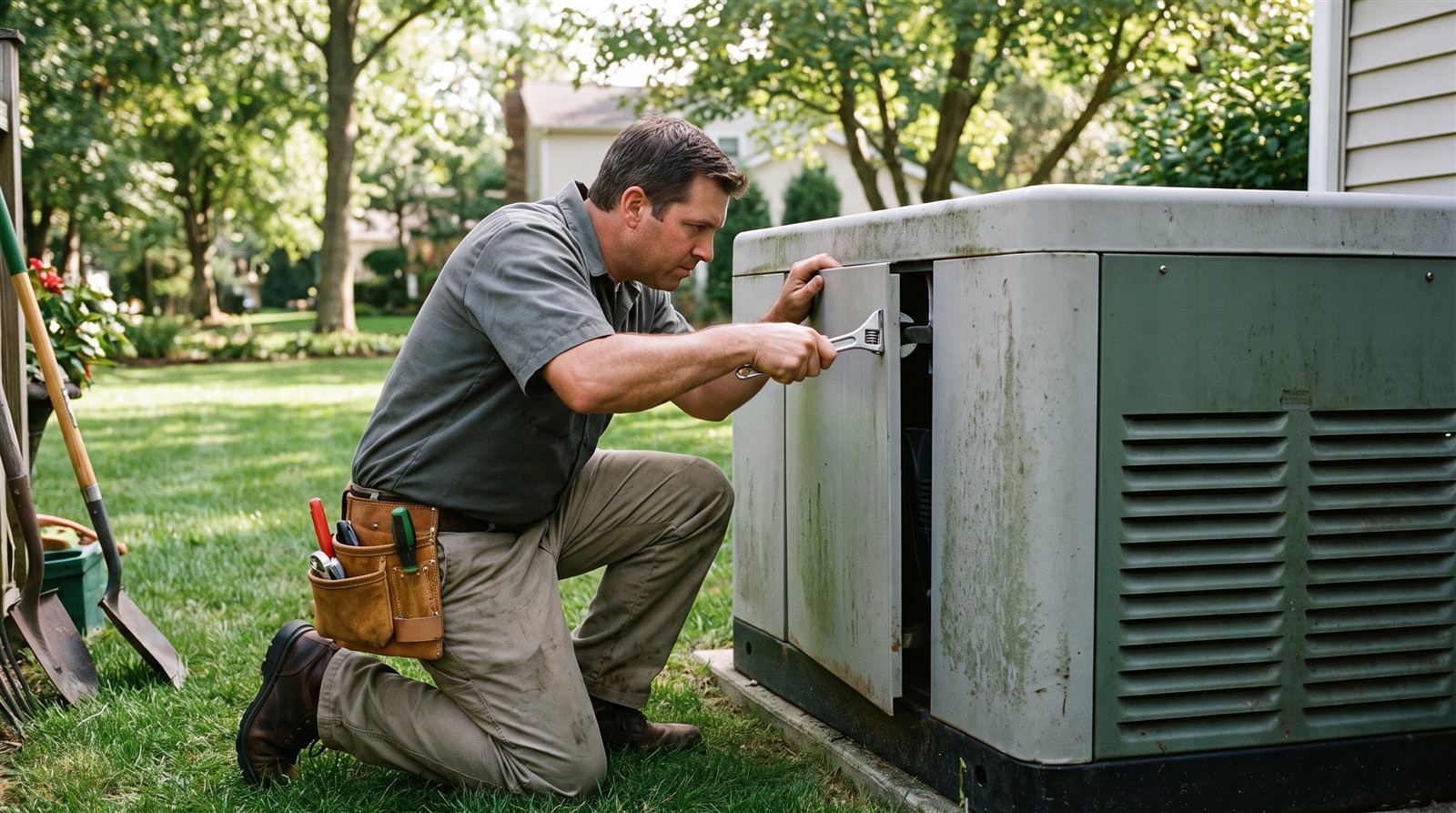
Timing your standby generator’s annual service around your region’s specific risk season, rather than around a generic manufacturer-suggested date, is one of the simplest ways to make sure your generator is actually ready when you’re most likely to need it. Scheduling maintenance too close to, or during, your highest-risk period means any issue a technician finds has little or no time to be resolved before an outage hits, while scheduling well ahead of the season gives you a real buffer to address problems calmly instead of urgently.
Why Timing Matters as Much as Frequency
An annual service visit accomplishes the same core tasks regardless of when in the year it happens: oil change, filter checks, battery testing, and a load-bank test. What changes based on timing is how much runway you have if the technician finds something that needs a follow-up repair or a part order. A generator serviced in early spring, ahead of a summer hurricane season, gives you weeks or months to resolve any issue found. The same service performed in August, once storms are already forming, leaves little room to fix a problem before you might actually need the unit.
Gulf Coast and Atlantic Hurricane Regions
For homeowners along the Gulf Coast and Atlantic hurricane-prone states, spring is generally the most practical window for annual service, positioning your generator to be fully checked out before hurricane season activity typically increases later in the year. Waiting until a storm is already being tracked toward your area is far too late to schedule routine maintenance, since service providers in these regions see a predictable surge in both maintenance requests and installation demand as storms approach, which can mean significant wait times for anyone who didn’t plan ahead.
Cold-Climate and Winter Storm Regions
Homeowners in regions prone to severe winter storms, ice storms, or extended cold snaps are better served scheduling their annual service in fall, before the first hard freeze of the season. This timing lets a technician verify cold-weather-specific systems, like a block heater or battery warmer, are functioning correctly while there’s still time to address any issue before genuinely cold weather arrives. See our winterizing checklist for the specific cold-weather items worth confirming during this visit.
California and Wildfire-Related Outage Regions
Homeowners in California and other areas affected by utility-initiated Public Safety Power Shutoffs (PSPS) during high fire-risk conditions face a somewhat different pattern than hurricane or winter-storm regions, since these planned outages are tied to dry, windy conditions that typically increase risk in the warmer and drier months. Scheduling service in spring, before the period when PSPS events become more likely, follows a similar logic to hurricane-region timing: get the generator checked out while there’s no immediate pressure, rather than scrambling once shutoff notices start appearing.
Texas and Extreme Weather Volatility
Texas homeowners face a somewhat unique profile, given the state’s exposure to both severe summer heat and, as demonstrated during the February 2021 winter storm Uri, significant winter grid strain as well. This dual exposure makes a case for not waiting for a single “storm season” and instead treating both a spring and a fall check-in as reasonable touchpoints, even if the full annual service happens only once, with a quick self-test and visual check at the other seasonal transition.
General Guidance for Other Regions
Homeowners outside these specific higher-profile risk regions still benefit from timing service ahead of whatever their local risk pattern looks like, whether that’s severe thunderstorm season, an ice storm history, or simply aligning with when extended outages have historically occurred in their area. The core principle holds everywhere: schedule service with enough lead time before your highest-risk period that a technician has room to fix anything found, rather than treating the appointment as a formality to complete whenever it’s convenient.
Note: exact seasonal risk timing varies year to year and by specific location within a region. Check current seasonal outlooks from your regional weather service or utility as your service date approaches, rather than relying solely on a fixed calendar assumption.
Booking Ahead of the Rush
Service providers in storm-prone regions are busiest right before and right after major weather events, which means booking your annual visit well ahead of your risk season, rather than trying to schedule once concern starts building, gets you a far more convenient appointment window and a technician who isn’t stretched across an overwhelming backlog of emergency calls.
Key Takeaways
- Schedule annual generator service well ahead of your region’s highest-risk season, not during it, so any issues found have time to be resolved.
- Gulf Coast and Atlantic hurricane-region homeowners generally benefit from spring service, ahead of hurricane season.
- Cold-climate homeowners benefit from fall service, focused on cold-weather readiness before the first hard freeze.
- California wildfire and PSPS-affected homeowners benefit from spring service, ahead of the drier, higher-fire-risk months.
- Booking early avoids the seasonal service backlog that builds up right before and after major weather events in every high-risk region.
Frequently Asked Questions
Is there one universal “best month” to service a standby generator?
No, the ideal timing depends on your region’s specific risk pattern, whether that’s hurricane season, winter storms, or wildfire-related shutoffs. The consistent principle is scheduling service well ahead of your area’s highest-risk period, not during it.
What if I miss the ideal seasonal window for my region?
It’s still worth scheduling service as soon as possible rather than waiting for the “right” time next year. A generator with an overdue service is better addressed promptly, even outside the ideal seasonal window, than left unaddressed until the following spring or fall.
Do I need service twice a year if I live somewhere with multiple risk seasons, like Texas?
A full professional service is typically still just once a year for most manufacturers’ recommendations, but homeowners in regions with more than one distinct risk season sometimes add a simple self-check or visual inspection at the second seasonal transition as extra reassurance, in addition to the single full annual service.
Why do service appointments get harder to book right before a hurricane or storm?
Demand for both maintenance and new installations spikes sharply as a storm approaches or immediately after a damaging event, since many homeowners are prompted to act at the same time. Service providers in these regions see predictable seasonal surges, which is exactly why scheduling ahead of that rush gets you better availability.
Does the timing of my service visit affect my generator’s warranty?
Generally, warranty coverage depends on completing required maintenance within manufacturer-specified intervals, not on which specific month you choose, as long as you stay within those intervals. Check your specific warranty terms, since requirements can vary by manufacturer.