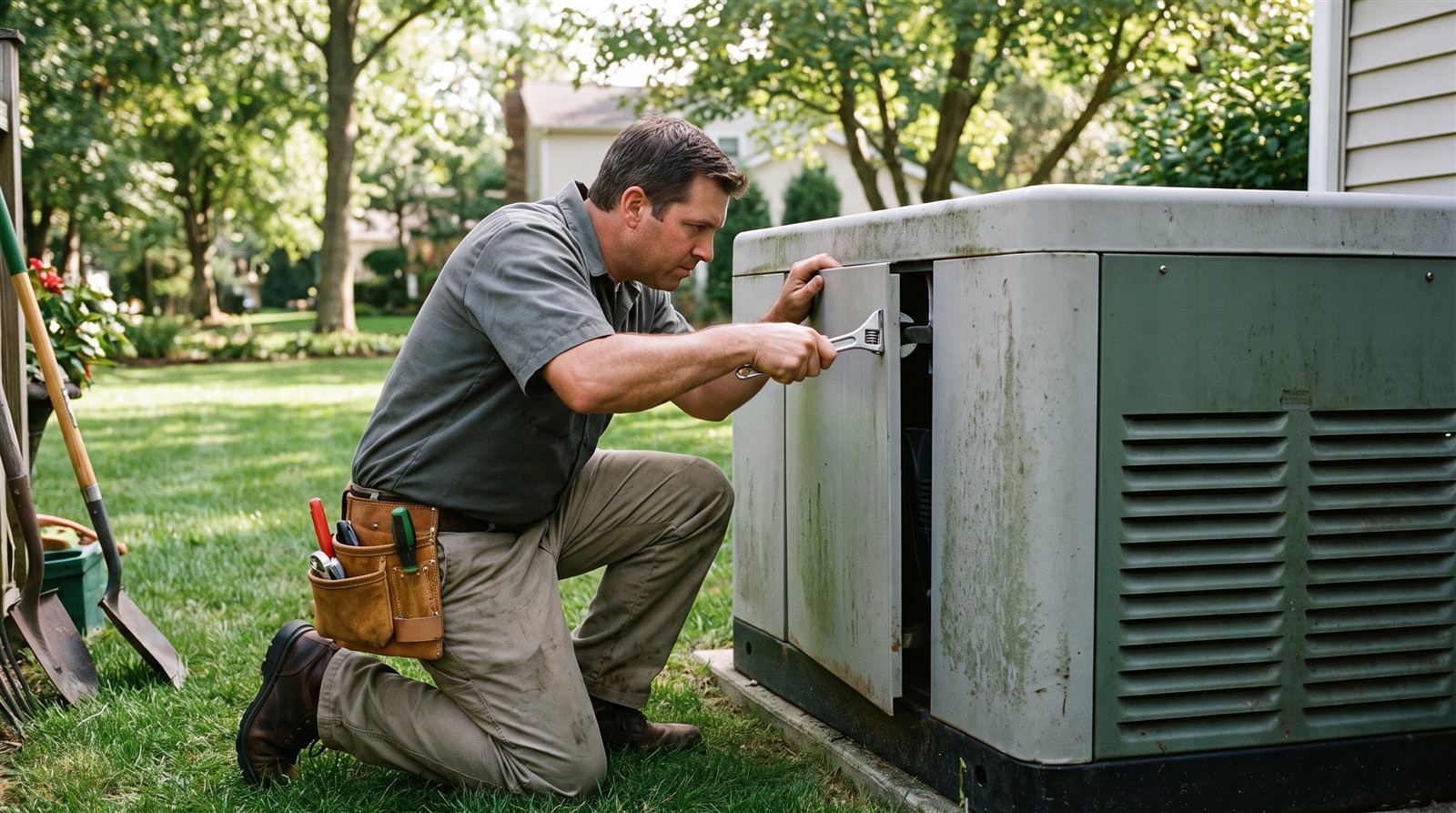
Winter is one of the seasons when a standby generator is most likely to be called into service, whether for an ice storm knocking down power lines or a prolonged cold snap straining the grid, which makes cold-weather readiness especially important to get right before the first hard freeze arrives. Unlike portable generators that often get stored away for winter, a whole-house standby unit stays outside year-round, so winterizing it is less about shutting it down and more about confirming every system that helps it start reliably in cold temperatures is actually working.
Why Cold Weather Is Hard on Generators
Cold temperatures thicken engine oil, reduce battery capacity, and can affect fuel delivery, all of which make an engine harder to start. Manufacturers address this in a few specific ways: many standby generators include a block heater or oil heater that keeps the engine warm enough to start easily, and cold-climate models often ship with a factory cold-weather kit that includes a battery warmer or an insulated enclosure. Winterizing is largely about confirming these built-in systems are functioning before you actually need them.
Step-by-Step Winterizing Checklist
- Check the battery and charging system: cold weather reduces battery capacity faster than most people expect. Have a technician or check yourself (if comfortable doing so) that the battery holds a proper charge and that the trickle charger or battery tender built into the generator’s control system is functioning correctly.
- Verify the block heater or cold-weather kit is working: if your generator has a cold-weather kit, confirm the block heater or oil heater engages as designed. This is often easiest to verify during a professional fall service visit, since it typically requires checking electrical connections you may not be familiar with.
- Inspect the enclosure for weather sealing: check that vents, louvers, and access panels are free of debris, leaves, and nesting materials, and that any weatherproofing or cold-weather enclosure panels are properly seated.
- Check fuel supply and lines: for propane systems, verify the tank is filled to an adequate level heading into winter, since heating demand on a shared tank increases fuel draw. For natural gas systems, confirm there’s no visible damage to the exposed gas line from yard work or freeze-related ground movement.
- Change the oil if due: cold starts are harder on engine oil, and using the manufacturer-recommended oil weight for cold climates (if a seasonal oil change is specified for your unit) can make a meaningful difference in cold-start reliability.
- Clear snow and ice accumulation zones: confirm that expected snow accumulation won’t block the generator’s air intake, exhaust, or the required clearance around the unit. Some homeowners install a simple wind break or snow guard, following manufacturer guidance, in areas with heavy drifting snow.
- Test the transfer switch and control panel in cold conditions: if possible, observe a scheduled self-test cycle during a genuinely cold morning to confirm normal operation, rather than only checking on a mild day.
- Review the automatic exercise schedule: confirm the weekly self-test is still scheduled and running; a battery or ignition issue that surfaces slowly is much easier to catch through a working self-test than to discover during an actual winter outage.
- Schedule a professional inspection before the season’s first hard freeze: an annual or seasonal maintenance visit timed for early fall, before extreme cold arrives, gives you time to address any issues a technician finds before you actually need the generator.
Cold-Climate-Specific Considerations
Homeowners in regions that see extended sub-freezing temperatures, ice storms, or heavy snow loads should pay particular attention to whether their generator model and its optional cold-weather kit are actually rated for their local climate. Not every standby generator ships with the same cold-weather equipment as standard, and in colder states this is worth confirming directly with your installer rather than assuming every unit handles winter equally well. If you’re purchasing a new generator specifically because of an ice storm history in your area, ask directly whether the model and its options include cold-weather starting aids.
What Not To Do
Avoid covering the generator’s air intake or exhaust vents with a tarp or improvised cover in an attempt to keep out snow, since this can restrict airflow the unit needs both to run and to safely vent exhaust. Manufacturer-approved winter covers, when available, are designed to allow proper airflow; anything that isn’t specifically designed for the unit risks creating a hazard rather than solving one. Also avoid attempting to service the block heater, battery warmer, or any internal electrical component yourself unless you are specifically trained to do so; these are best left to a qualified technician during a scheduled maintenance visit.
Key Takeaways
- Winterizing a standby generator focuses on confirming built-in cold-weather systems (block heater, battery warmer) are functioning, not shutting the unit down.
- Battery capacity drops in cold weather, making the battery and charging system one of the most important pre-winter checks.
- Keep the generator’s air intake, exhaust, and required clearance zones clear of snow and ice accumulation.
- Schedule professional service before the first hard freeze of the season, giving time to fix any issues that turn up.
- Never cover intake or exhaust vents with an improvised tarp or cover; use only manufacturer-approved accessories.
Frequently Asked Questions
Do all standby generators need a cold-weather kit?
Not necessarily, but generators installed in regions with extended sub-freezing temperatures typically benefit from one, since it helps the battery and engine oil stay warm enough for reliable cold starts. Check with your installer or manufacturer about what’s recommended for your specific climate.
Can I winterize my generator myself, or do I need a professional?
Some basic checks, like clearing debris and confirming the self-test is running, are reasonable for a homeowner to do. Battery testing, block heater verification, and oil changes are typically better handled by a qualified technician, especially since they often overlap with a scheduled annual service visit.
What happens if snow covers the generator’s exhaust vent?
A blocked exhaust vent can prevent the generator from venting combustion gases properly and may prevent it from running safely or at all. Keeping the manufacturer-specified clearance area around the unit clear of snow is an important part of winter readiness.
How cold does it need to be before a generator has starting problems?
This varies by generator model, battery condition, and whether a cold-weather kit is installed and functioning. Rather than relying on a specific temperature threshold, focus on confirming the weekly self-test continues to run normally as temperatures drop.
Should I run my generator more often in winter to keep it ready?
The standard weekly self-test cycle is generally sufficient and is specifically designed to keep the engine, battery, and fuel system in working order year-round. If you notice the self-test struggling or taking longer to start during cold weather, that’s a signal to have it checked rather than a reason to run it more frequently on your own.