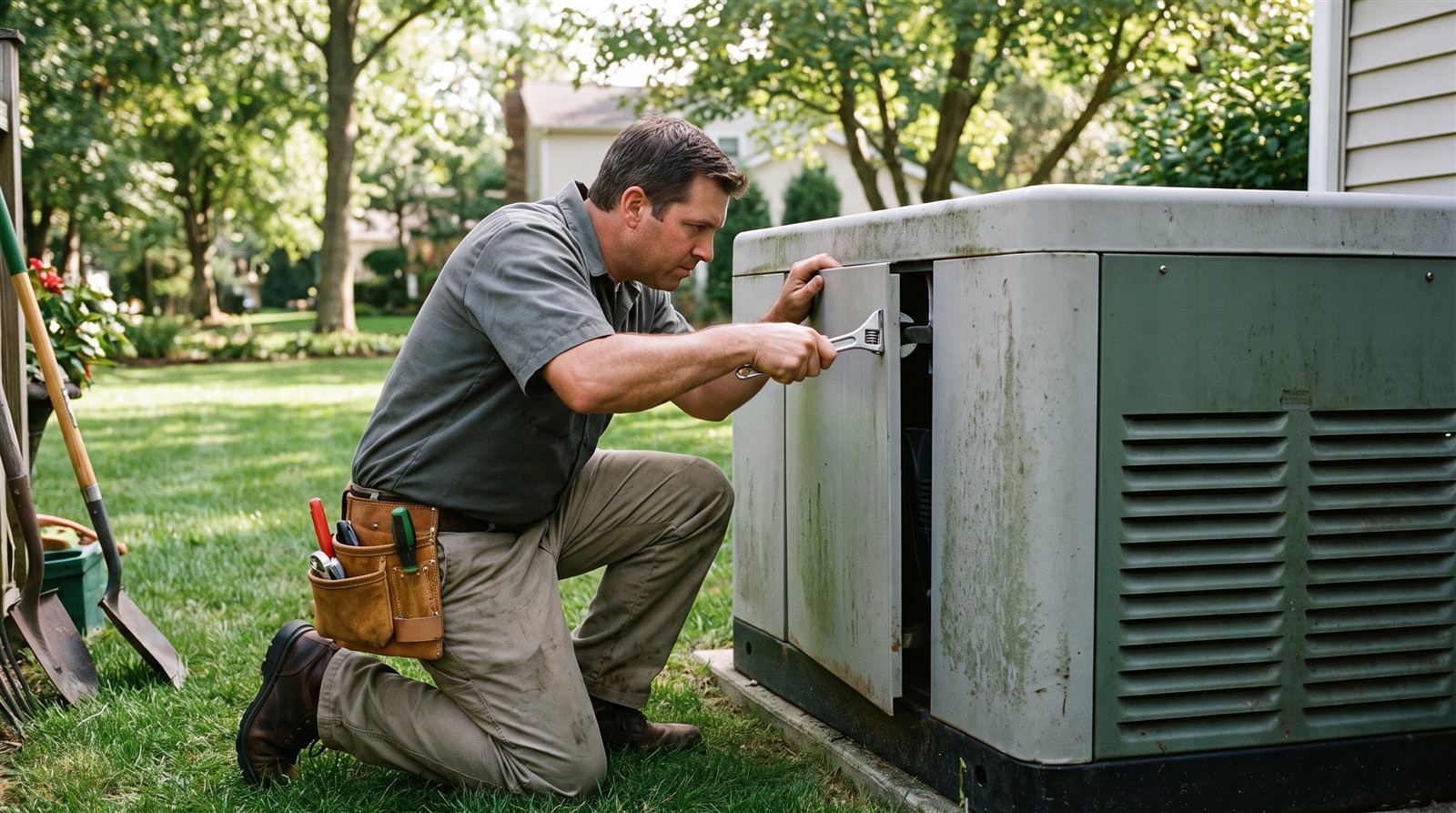
Choosing between natural gas, propane, and diesel for a whole-house standby generator affects not just the upfront installation but every hour the unit runs afterward, since fuel cost per kilowatt-hour of backup power varies meaningfully between the three. In general, natural gas tends to be the cheapest to run where it’s available because it draws from a continuous utility line at a stable regulated rate, propane costs more per unit of energy but offers total independence from any utility connection, and diesel sits in between on fuel cost but is far less common in residential installations. The right answer depends less on a universal price comparison and more on what’s actually available at your address and how you plan to use the generator.
How the Three Fuels Actually Compare
Natural gas is priced and billed like any other utility service, through your existing gas meter, and its cost per therm is set by your regional utility rather than fluctuating with global oil markets the way propane and diesel prices can. Because the supply is piped in continuously, a natural gas generator never runs out of fuel during an extended outage, which is one of its biggest practical advantages over tank-based fuels.
Propane is stored in a tank on your property, typically owned or leased and refilled by a local propane supplier. Propane pricing fluctuates more than natural gas, tends to run higher per equivalent unit of energy, and requires you to actively manage tank level, especially before hurricane season or a forecasted major storm when suppliers can see a surge in delivery requests. The upside is that propane doesn’t depend on a utility gas line being intact, which matters in scenarios where the outage is tied to broader infrastructure damage.
Diesel, while common in commercial and industrial standby power, is less frequently chosen for residential whole-house generators, mostly because of noise, emissions, and local code restrictions in many residential zones. Where it is used, diesel generators are often prized for fuel stability during long-duration outages and can be more fuel-efficient per kilowatt-hour generated than gasoline-based alternatives, but the fuel itself typically costs more than natural gas and requires the same tank-management awareness as propane.
Running Cost Per Hour: What Actually Drives the Number
The real running cost of any generator depends on three things: the fuel’s price per unit of energy in your area, the generator’s fuel consumption rate at your typical load, and how many hours you actually run it. A generator running at 50% load consumes meaningfully less fuel per hour than one running near full capacity, which is one reason why right-sizing a generator to your essential circuits, rather than oversizing it “just in case,” has a direct effect on your fuel bill during a multi-day outage.
| Factor | Natural Gas | Propane | Diesel |
|---|---|---|---|
| Supply source | Continuous utility line | On-site tank, refilled | On-site tank, refilled |
| Runs out during outage? | No (barring gas service disruption) | Yes, if tank runs low | Yes, if tank runs low |
| Typical cost per unit of energy | Generally lowest | Generally highest | Mid-range |
| Availability | Requires existing gas line | Available almost anywhere | Less common in residential zones |
| Fuel storage concerns | None | Tank level monitoring | Fuel stability over time |
Note: exact fuel prices vary significantly by region, season, and local utility or supplier. Check current natural gas and propane rates with your own utility and local suppliers rather than relying on a national average.
Availability Often Matters More Than Price
For many homeowners, the fuel decision isn’t really about which is cheapest per hour, it’s about which fuel they can actually get to their generator in the first place. Homes without an existing natural gas line face a meaningful added cost to bring gas service to the property, which often makes propane the practical default even though it costs more to run. Conversely, homes already on natural gas rarely have a good reason to switch to a propane tank installation purely for running-cost savings, since the price difference over the life of the generator is unlikely to offset the cost of the tank and conversion.
Long-Duration Outages Change the Math
For a short outage of a few hours, fuel cost differences between the three options are negligible in absolute dollar terms. The comparison matters much more during extended multi-day outages, the kind associated with major hurricanes or severe winter storms, when a natural gas generator has an inherent advantage: it simply keeps running as long as the gas utility keeps delivering, while propane and diesel owners need to monitor tank levels and may need an emergency refill from a supplier who is also serving many other customers at the same time.
Maintenance and Efficiency Differences Between Fuels
Fuel choice also has secondary effects on maintenance. Propane and natural gas both burn cleaner than diesel, which generally means less carbon buildup in the engine and can translate to marginally longer intervals between certain service items, though manufacturer-recommended maintenance schedules should always take priority over general assumptions. Diesel engines, while often praised for durability under continuous heavy-duty use, require more attention to fuel quality and periodic fuel system servicing on units that sit unused for long stretches between outages, since diesel fuel degrades more over time than gaseous fuels stored as gas or propane.
Key Takeaways
- Natural gas is typically the cheapest fuel to run and never runs out during an outage, provided your gas utility service stays intact.
- Propane costs more per unit of energy but works anywhere a tank can be installed, making it the default for homes without existing gas service.
- Diesel sits in the middle on running cost but is less common residentially due to noise, emissions, and zoning restrictions.
- Fuel availability at your specific property often matters more than a generic cost comparison between the three options.
- Long multi-day outages amplify the practical differences between a continuous gas supply and a finite on-site tank.
Frequently Asked Questions
Is propane really more expensive than natural gas to run a generator?
In most markets, yes, propane costs more per equivalent unit of energy than natural gas. However, exact pricing varies by region and supplier, so it’s worth checking current local rates rather than assuming a fixed percentage difference everywhere.
Can I switch my existing propane generator to natural gas later?
Some generator models can be converted between natural gas and propane with a conversion kit and adjustment by a qualified technician, but not all models support this, and it typically also requires bringing a gas line to the property if one doesn’t already exist. Check with the manufacturer and a licensed installer before assuming a conversion is straightforward.
Why don’t more homes use diesel generators if diesel is efficient?
Diesel generators tend to be louder and produce different emissions than natural gas or propane units, which puts them at odds with many residential noise ordinances and homeowner association rules. They’re more common on rural properties or larger installations where these restrictions are less of a factor.
How much propane does a whole-house generator use per hour?
Fuel consumption depends heavily on the generator’s size and how much load it’s carrying at any given moment. A generator running near its rated capacity uses noticeably more fuel per hour than the same unit running a partial load, which is one reason installers try to size units to match your actual essential-circuit needs rather than oversizing.
Does the fuel type affect how loud the generator is?
Fuel type has some influence, but the enclosure design, engine type, and generator size typically matter more for noise output than whether the unit runs on natural gas, propane, or diesel specifically.