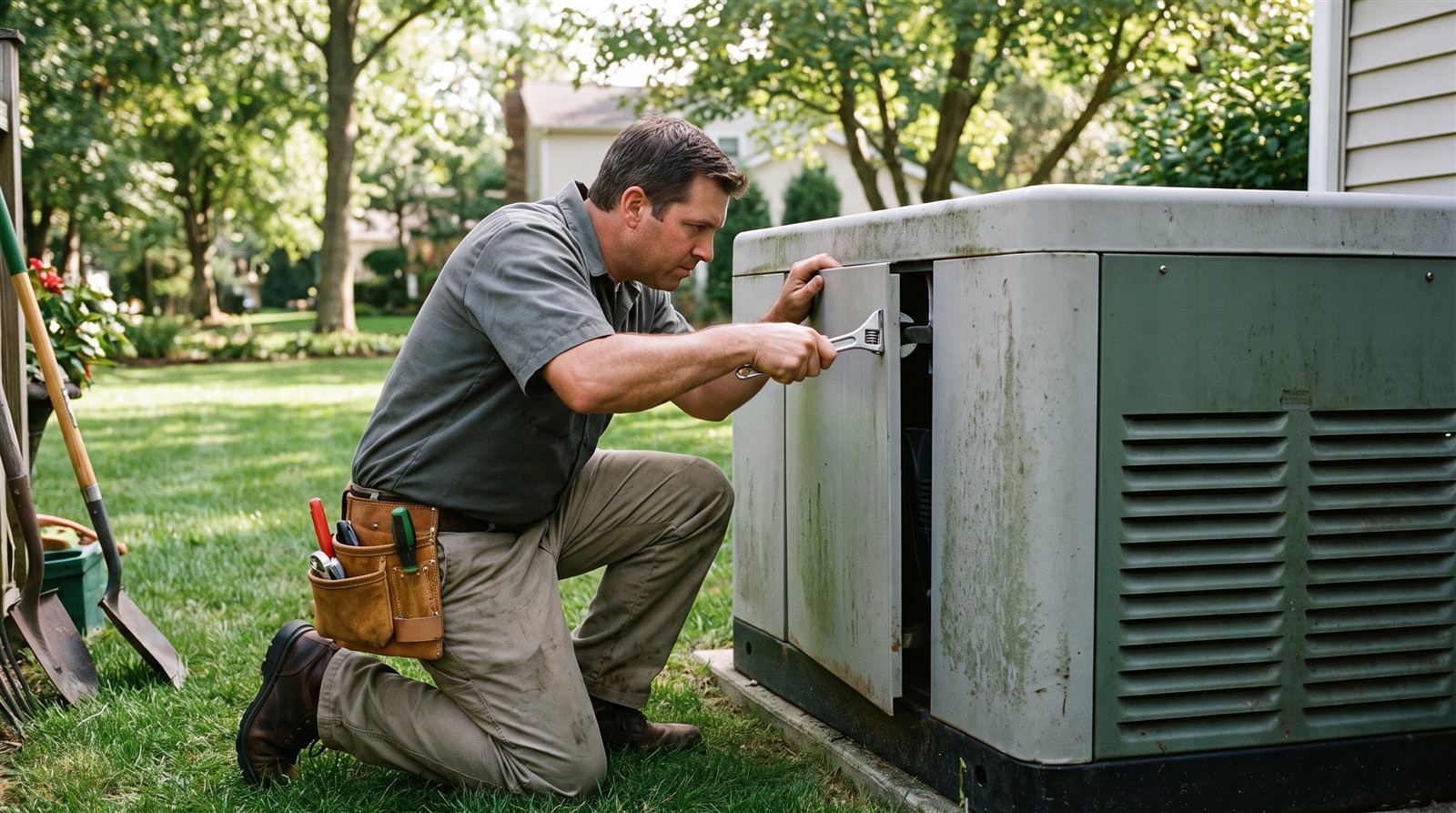
Despite the name, not every “whole house generator” actually runs an entire home at full capacity simultaneously, and understanding the difference matters both for what you buy and for how you use it during an outage. The honest answer is that it depends on how the generator was sized during installation: a large enough unit paired with a full-transfer setup can genuinely run everything in a typical home at once, while a smaller unit paired with a load management device is designed specifically to run essential circuits, cycling larger loads on and off automatically so it never gets overwhelmed.
What “Whole House” Actually Means in the Industry
The term “whole house generator” is used broadly across the industry to describe permanently installed standby generators, as opposed to portable units you’d wheel out and plug in during an outage. It doesn’t automatically mean the specific unit is sized to run every circuit in your home simultaneously at full load. Two homes can each have a “whole house generator” and end up with very different real-world capability, depending on how the installer sized the unit relative to the home’s total electrical demand.
Full-House Coverage vs. Essential-Circuit Coverage
A generator sized for full-house coverage is large enough to handle your home’s total connected electrical load, including high-draw items like central air conditioning, an electric range, and an electric water heater, all running at the same time if needed. This typically requires a larger, more expensive generator and is most common in newer installations or larger homes where the additional equipment cost is worth the convenience of never having to think about what’s running.
A generator sized for essential-circuit coverage is smaller and paired with a transfer switch that only energizes a preselected set of circuits during an outage, commonly refrigeration, some lighting, a sump pump, a well pump, and perhaps one zone of heating or cooling. This approach costs less upfront and still covers the circuits that matter most for safety and comfort, but it means certain things, like running the whole HVAC system and every major appliance simultaneously, may not be possible.
Load Management: The Middle Ground
Many modern installations use a load management device, sometimes called a smart load center or power management module, that lets a smaller generator effectively cover more of the home than its raw capacity would otherwise allow. These devices monitor total demand and automatically shed or delay lower-priority circuits, like an electric water heater or a second air conditioning zone, when a higher-priority circuit needs power, then bring the lower-priority circuit back once capacity is available. This lets homeowners get closer to whole-house convenience without paying for the largest generator on the market.
| Approach | What It Covers | Typical Cost Impact |
|---|---|---|
| Full-house coverage | Every circuit, simultaneously, no cycling | Higher generator cost |
| Essential-circuit only | Preselected critical circuits only | Lower generator cost |
| Load management + mid-size generator | Most circuits, with automatic cycling of high-draw items | Moderate cost, added smart device |
How This Decision Gets Made During Installation
During the site survey described in most installation guides, the installer calculates your home’s total electrical load, or works with you to identify your essential circuits, and then recommends a generator size and transfer switch configuration to match. This is the point where the full-house-versus-essential-circuits decision actually gets made, and it’s worth being direct with your installer about your priorities and budget rather than assuming “whole house” in a product name guarantees a specific level of coverage.
Note: exact sizing calculations depend on your home’s specific electrical panel, appliances, and local code requirements. A qualified installer’s load calculation for your actual home is the only reliable way to determine what generator size and configuration you need.
What Happens If You Try to Run More Than the Generator Can Handle
If a generator without load management is asked to carry more electrical demand than it’s rated for, it can trip its own internal protection, shut down, or in some cases be damaged by sustained overload. This is exactly why essential-circuit setups deliberately limit what’s connected to the generator circuit in the first place, and why load management systems are designed to intervene automatically rather than relying on a homeowner to manually manage what’s running during a stressful outage.
Choosing the Right Approach for Your Household
There’s no universally correct choice between full-house and essential-circuit coverage; it comes down to budget, how long outages typically last in your area, and how much inconvenience you’re willing to accept during an outage in exchange for lower upfront cost. Households in regions with frequent short outages may find essential-circuit coverage perfectly adequate, while those in areas prone to extended multi-day outages, or households with specific medical equipment needs, often lean toward full-house coverage or a robust load management setup.
Key Takeaways
- “Whole house generator” is an industry term for a permanently installed unit and doesn’t automatically mean it covers every circuit simultaneously.
- Generators can be sized for full-house coverage, essential circuits only, or a middle-ground load management approach.
- Load management devices let a smaller generator cover more of the home by automatically cycling lower-priority circuits.
- The full-house-versus-essential decision is made during the installer’s load calculation, not something to assume from a product name.
- Overloading a generator without load management can trip protection or shut the unit down, which is why sizing and configuration matter.
Frequently Asked Questions
If I buy a “whole house generator,” will it automatically run everything?
Not necessarily. The term describes a permanently installed standby unit, but whether it covers every circuit simultaneously depends on how it was sized and configured during installation. Confirm this directly with your installer based on your home’s actual electrical load.
What’s the difference between essential circuits and load management?
Essential-circuit coverage physically connects only a preselected set of circuits to the generator, while load management connects more circuits but automatically cycles lower-priority ones on and off to stay within the generator’s capacity. Load management generally offers more convenience for a moderate cost increase over essential-circuit-only setups.
Can I upgrade from essential-circuit coverage to full-house coverage later?
In some cases, yes, particularly if you add a load management device or upgrade to a larger generator, but this typically requires additional electrical work and should be evaluated by a qualified installer based on your existing setup.
What happens if my essential-circuit generator is asked to power something not connected to it?
Nothing happens automatically, since only the circuits physically wired to the generator’s transfer switch receive power during an outage. Anything not on that circuit list simply has no power until utility service is restored.
Do I need a whole-house-capacity generator if I have medical equipment at home?
Households with critical medical equipment often prioritize more robust coverage, whether that’s full-house capacity or a well-designed essential-circuit and load management setup that guarantees the specific equipment’s circuit. Discuss your specific medical equipment needs directly with your installer during the load calculation.