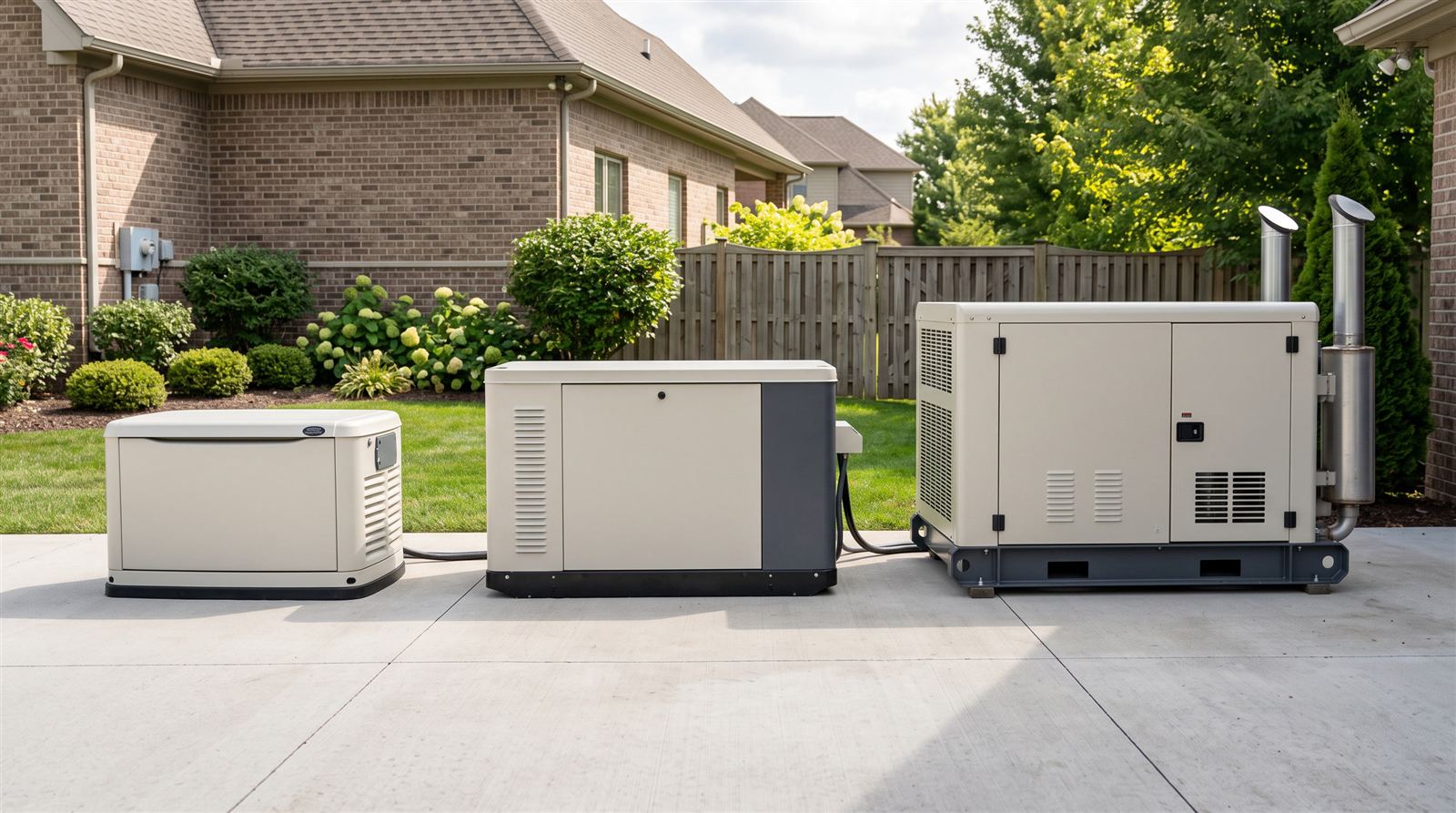
A 2,000 square foot home sits right in the sweet spot most standby generator manufacturers design for, which means you generally have the widest range of models, brands, and price points to choose from compared to much smaller or much larger homes. The right size still depends on your specific appliances and whether you want to run central air conditioning, but most homes in this range land in a fairly predictable kW window.
Typical Power Needs for a 2,000 Sq Ft Home
A home of this size with standard appliances, a furnace or heat pump blower, some lighting circuits, and one central air conditioning unit typically falls in the 16-20 kW range for a standby generator sized to cover most or all of the home at once. Homes without central air, or that are willing to use a load management device to stagger a few high-draw appliances, can sometimes get by with a smaller unit in the 12-16 kW range instead.
This is a general starting point, not a substitute for a professional load calculation — the specific number and type of major appliances (electric range, well pump, hot tub, additional AC units) can shift your actual requirement meaningfully in either direction.
| Home Configuration | Typical Generator Size |
|---|---|
| Essential circuits only, no central AC | 10-14 kW |
| Most circuits, no central AC | 14-16 kW |
| Most or all circuits, one central AC unit | 16-20 kW |
| Full whole-house coverage, well pump, multiple large appliances | 20-24 kW |
How the Major Brands Cover This Size Range
Every major manufacturer — Generac, Kohler, Cummins, and Briggs & Stratton — offers multiple air-cooled models in the size range that typically fits a 2,000 square foot home, which is why this is generally the most competitively priced segment of the standby market. Air-cooled units are the standard choice at this size for most homeowners, since liquid-cooled systems are usually reserved for larger homes or higher continuous-load applications and add cost without a clear benefit at this size for most buyers.
Generac’s broad air-cooled lineup and large dealer network often make it the easiest brand to get multiple competing quotes for in this size range. Kohler and Cummins also offer comparable air-cooled models that are worth quoting, particularly if a strong local dealer for either brand exists in your area. Briggs & Stratton is worth including in your quote comparison specifically if minimizing upfront cost is a priority.
Price Expectations for This Size Range
Installed cost for a properly sized 16-20 kW air-cooled generator on a 2,000 square foot home typically falls toward the middle of the broader $3,000-$12,000+ installed cost range for standby systems overall, assuming a relatively straightforward site without major electrical panel upgrades or unusual gas line work. Homes requiring a panel upgrade, a longer gas line run, or difficult site access for the concrete pad will trend toward the higher end of that range regardless of generator brand or size.
Note: always get at least three quotes from licensed local installers for the same generator size and scope of work, since installed pricing varies significantly by region and site conditions, not just by brand.
Should You Size Up or Size Down?
Some homeowners on a 2,000 square foot home choose a somewhat larger unit than the bare minimum load calculation suggests, to leave headroom for future additions like an EV charger, a hot tub, or a home addition. Others use a load management device to stagger high-draw circuits and get by with a smaller, less expensive unit that only runs the appliances it can support at any given moment, cycling others on and off automatically. Both approaches are legitimate — the right one depends on your budget and whether you expect your electrical load to grow.
Fuel Considerations at This Size
Most 16-20 kW units are available in both natural gas and propane configurations, and some manufacturers offer dual-fuel flexibility. If you already have natural gas service to your home, that is generally the more convenient fuel choice at this size, since a 16-20 kW unit’s gas demand is well within what most residential natural gas meters can supply. If you rely on propane, confirm your existing tank capacity and delivery schedule can support a generator running for extended periods during a multi-day outage.
Key Takeaways
- Most 2,000 square foot homes need a 16-20 kW standby generator to cover most or all circuits including one central AC unit.
- This size range is the most competitively priced segment of the market, with every major brand offering multiple air-cooled options.
- Installed cost typically lands in the middle of the broader $3,000-$12,000+ range, with site conditions affecting price as much as brand or size.
- Consider sizing up slightly or using load management if you expect future electrical demand growth, like an EV charger or addition.
- Get a professional load calculation rather than relying on square footage alone, since specific appliances can shift your actual sizing need.
Frequently Asked Questions
What size generator do I need for a 2,000 square foot house?
Most homes this size need a 16-20 kW standby generator to cover most or all circuits including central air conditioning, though homes without central AC or using load management devices can sometimes use a smaller 12-16 kW unit. A professional load calculation confirms the exact number for your specific appliances.
Is an air-cooled or liquid-cooled generator better for this size home?
Air-cooled generators are the standard and most cost-effective choice for a 2,000 square foot home in most cases. Liquid-cooled systems are typically reserved for larger homes or higher continuous-load situations and generally add cost without a clear benefit at this size.
How much does it cost to install a generator for a 2,000 sq ft home?
Installed cost typically falls in the middle of the broader $3,000-$12,000+ range for standby generators, assuming a relatively straightforward site. Panel upgrades, longer gas line runs, or difficult site access can push the price higher regardless of generator size.
Can I use a smaller generator with load management instead of a bigger unit?
Yes. A load management device can stagger high-draw circuits so a smaller, less expensive generator can still cover your home’s needs by preventing multiple large appliances from running simultaneously. This is a common way to reduce upfront cost while still getting broad coverage.
Should I size up for future additions like an EV charger?
If you are reasonably confident you will add significant electrical load in the next several years — an EV charger, a home addition, a hot tub — sizing up modestly now can avoid a costly generator replacement later. Discuss this with your installer during the load calculation.