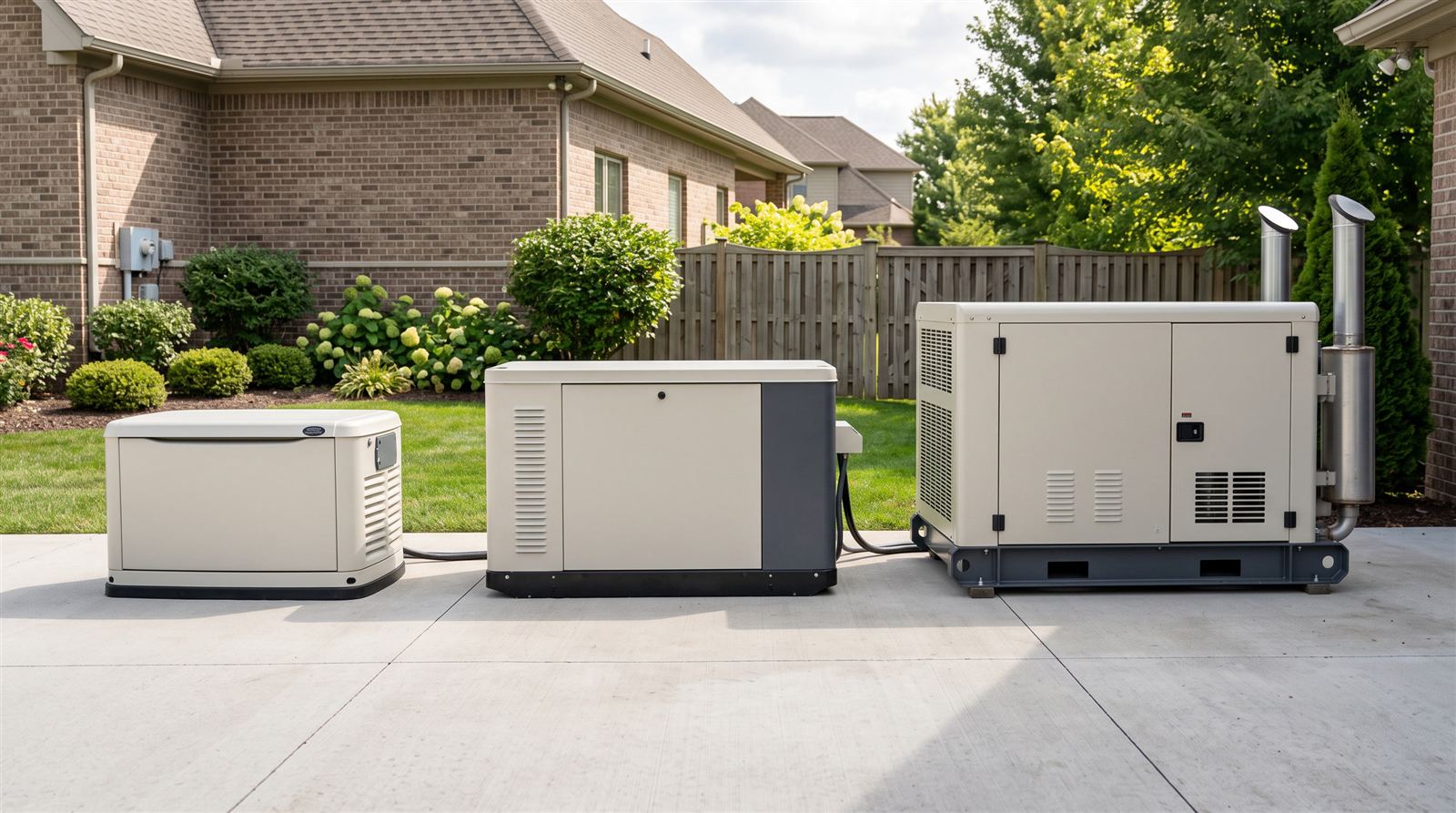
Tesla Powerwall and Generac generators are two of the most recognizable names in home backup power, but they represent fundamentally different technologies rather than two versions of the same product. Powerwall is a battery storage system, typically paired with solar, while Generac’s core business is fuel-burning standby generators. Comparing them fairly means understanding what each is actually good at, rather than assuming one is simply a newer or older version of the other.
Two Different Technologies, Not Two Competing Generators
A Generac standby generator burns natural gas or propane to produce electricity on demand and can, in principle, keep running as long as fuel supply holds out. Tesla Powerwall stores electricity in a battery, charged either from the grid ahead of time or from solar panels, and delivers that stored energy until it is depleted, after which it needs to recharge from the grid or the sun. This distinction — fuel supply versus stored capacity — drives almost every other difference between the two.
Cost Comparison
A Generac air-cooled generator sized for a typical home is generally installed within the broad $3,000-$12,000+ range depending on size and site conditions. A single Tesla Powerwall unit is often priced in a comparable range, but achieving whole-house-equivalent backup capacity, especially for larger loads or longer outages, frequently requires multiple Powerwall units, which can push total system cost meaningfully higher, particularly if solar panels also need to be added and are not already installed. Always get current, itemized pricing for both options based on your specific home’s calculated load, since list pricing for either technology changes and installation costs vary significantly by region.
| Factor | Generac Generator | Tesla Powerwall |
|---|---|---|
| Power source | Natural gas or propane combustion | Stored battery charge, rechargeable via grid or solar |
| Runtime limit | Fuel supply | Stored capacity and recharge rate |
| Noise during operation | Audible mechanical/exhaust noise | Silent operation |
| Typical single-unit cost range | Comparable to $3,000-$12,000+ installed, size-dependent | Comparable per-unit range; multiple units often needed for whole-home coverage |
| Maintenance | Periodic professional service, oil changes | Minimal routine maintenance; battery degrades gradually over years |
| Best for | Extended, multi-day outages | Shorter outages, or longer ones with solar recharging |
Runtime and Performance During an Outage
A properly fueled Generac generator can generally sustain output for as long as fuel supply lasts, which makes it well suited to extended, multi-day outages, particularly with natural gas service or a sizable propane tank. Tesla Powerwall’s runtime depends on how much energy is stored, your home’s actual draw, and — critically — whether solar panels can recharge the battery during daylight hours of the outage. In good sun with modest loads, a solar-paired Powerwall system can sustain a home indefinitely; in overcast conditions with heavier loads, stored capacity can be depleted well before a multi-day outage ends.
Note: never rely on either technology’s marketing runtime estimates without checking them against your home’s actual measured or calculated power draw — real-world performance varies significantly by household.
Noise and Everyday Experience
This is one of the starkest differences between the two. A Generac generator produces audible engine and exhaust noise whenever it runs, along with a brief self-test noise on a regular schedule even when there is no outage. Tesla Powerwall operates completely silently, with no exhaust and no moving combustion parts, which is a significant advantage for noise-sensitive properties, tight neighborhoods, or homeowners who simply prefer not to hear machinery running during an outage.
Maintenance and Long-Term Ownership
A Generac generator requires periodic professional maintenance, generally including oil changes and inspections on a schedule defined by running hours, along with regular self-tests to confirm readiness. Tesla Powerwall requires far less routine maintenance, since there is no engine or fuel system, but batteries do gradually lose some capacity over years of use, an eventual consideration for any battery-based system regardless of manufacturer.
Which One Actually Fits Your Home
Homeowners facing frequent extended outages, without existing solar, or wanting the lowest-cost path to meaningful whole-house coverage often lean toward a Generac or comparable fuel-based generator. Homeowners who already have or are planning solar, experience mostly shorter outages, prioritize silent operation, or want to reduce reliance on combustion fuel are often better served by Tesla Powerwall or a comparable battery system. Some homeowners choose both, using a smaller battery system for quiet everyday short-outage coverage and a fuel generator as a backstop for extended events.
Key Takeaways
- Generac generators are fuel-limited but can sustain output as long as fuel supply lasts; Tesla Powerwall is capacity-limited but recharges via grid or solar.
- Single-unit costs for each are comparable, but whole-home Powerwall coverage often requires multiple units, raising total system cost.
- Powerwall operates completely silently; Generac generators produce audible noise whenever running, including scheduled self-tests.
- Generac generally suits extended multi-day outages better; Powerwall suits shorter outages or longer ones with reliable solar recharging.
- Some homeowners combine both technologies to get quiet everyday coverage plus reliable extended-outage backup.
Frequently Asked Questions
Is Tesla Powerwall cheaper than a Generac generator?
Pricing for a single unit of each is often comparable, but achieving true whole-house backup capacity with Powerwall frequently requires multiple units, which can raise total cost above a comparably capable Generac installation, especially if solar panels also need to be added.
How long does Tesla Powerwall last during a power outage?
It depends on stored capacity, your home’s actual power draw, and whether solar panels can recharge the battery during the outage. With good sun and modest loads it can sustain a home indefinitely; without solar recharging or in poor weather, stored capacity will eventually run out.
Is a Generac generator louder than Tesla Powerwall?
Yes. A Generac generator produces audible mechanical and exhaust noise whenever it runs, including brief scheduled self-tests. Tesla Powerwall operates silently since it has no combustion engine or moving parts involved in producing power.
Do I need solar panels to use Tesla Powerwall for backup power?
Powerwall can be charged from the grid without solar, but its ability to sustain a home through an extended outage depends heavily on solar recharging. Without solar, it functions more like a large battery reserve that depletes and cannot recharge until grid power returns.
Can I have both a Generac generator and a Tesla Powerwall?
Yes, some homeowners install both, using the battery system for quiet, everyday short-outage coverage and the fuel generator as a backstop for longer or more severe outages, combining the strengths of each technology at additional total cost.