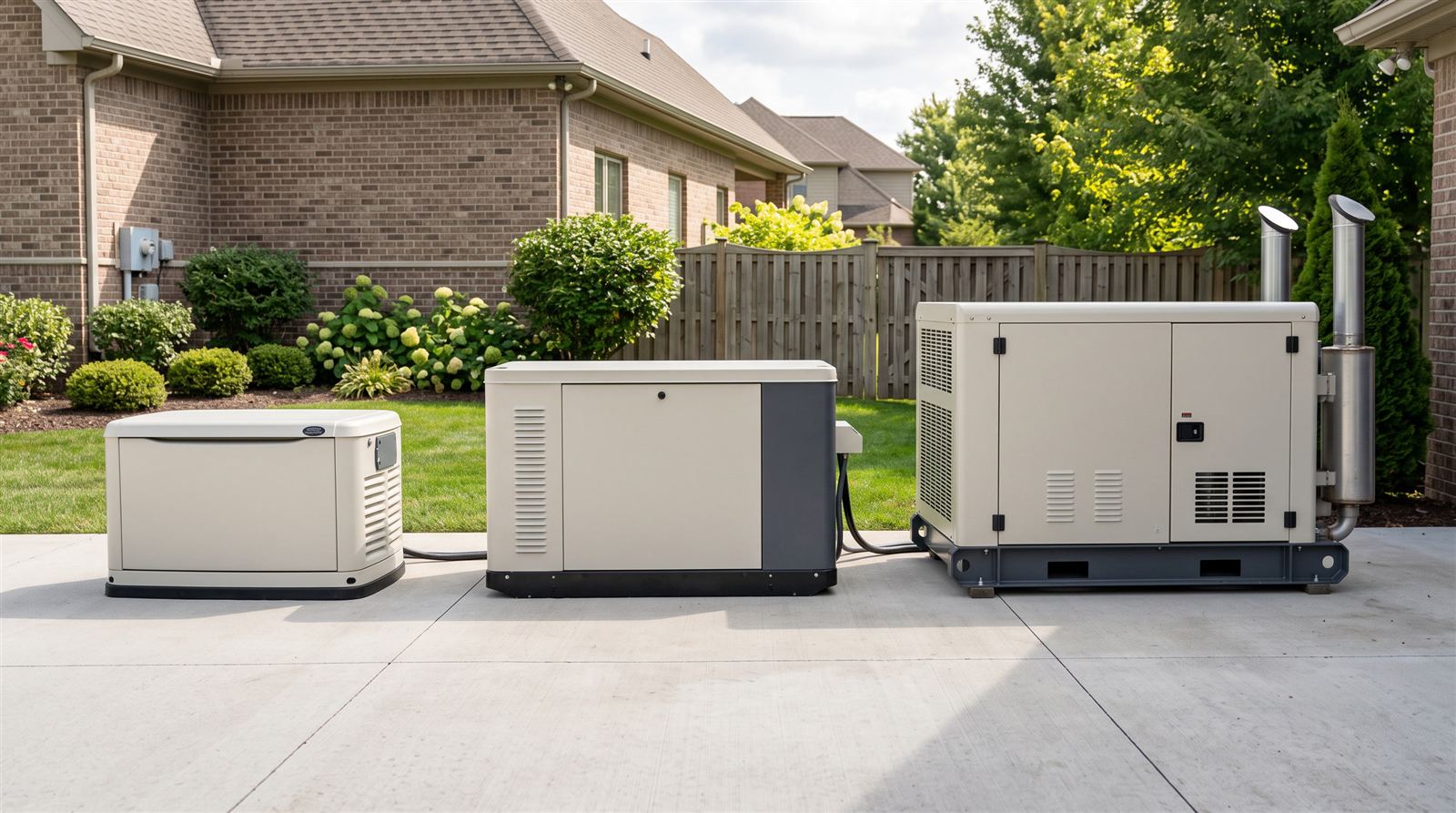
Finding a genuinely reliable whole-house generator on a tighter budget is possible, but it requires knowing which cost-saving decisions are reasonable and which ones quietly undermine the reliability you are paying for in the first place. The cheapest option on paper is not always the cheapest option over the life of the generator, especially if it leads to undersizing, poor installation, or a brand with limited local dealer support.
Where Real Savings Come From
The biggest cost lever in a whole-house generator project is usually generator size, not brand choice alone. Choosing an air-cooled unit correctly sized to your actual load, rather than an oversized unit “just in case,” is one of the most legitimate ways to reduce cost without sacrificing reliability. Pairing a smaller, less expensive unit with a load management device that staggers high-draw circuits is another well-established way to reduce upfront generator cost while still covering your home’s essential needs.
Site conditions matter just as much as generator price. A straightforward site with an existing natural gas line, an electrical panel that does not need upgrading, and easy access for pad installation will cost meaningfully less to install than a difficult site, regardless of which generator brand you choose.
Brand Price Positioning
Briggs & Stratton and Generac’s entry-level air-cooled lines are generally positioned as the more budget-accessible options in the standby generator market, making them worth prioritizing in your quote comparisons if minimizing price is a primary goal. Kohler and Cummins tend to price their comparable offerings at a similar or somewhat higher tier, though checking current local pricing matters more than general brand positioning, since promotions and regional dealer pricing can shift the picture.
| Cost Lever | Genuine Savings | Risky Shortcut |
|---|---|---|
| Correct sizing | Avoiding unnecessary oversizing | Undersizing below your actual calculated load |
| Load management device | Smaller unit covers essentials via staggering | Skipping load calculation altogether |
| Multiple installer quotes | Competitive pricing for the same scope of work | Choosing the lowest bid without checking licensing |
| Air-cooled vs liquid-cooled | Air-cooled is appropriate and cheaper for most homes | Choosing liquid-cooled unnecessarily for a small home |
| Straightforward site conditions | Lower labor cost for gas, electrical, and pad work | Ignoring site issues that surface as change orders later |
Where Cutting Cost Genuinely Compromises Reliability
Undersizing your generator to save money on the unit itself is the most common way “cheap” turns into “unreliable” — an undersized generator running chronically overloaded wears out faster and may not even power the essential circuits you actually need during an outage. Skipping a proper professional load calculation in favor of a rough size guess is a related shortcut that frequently leads to this exact problem.
Choosing an installer based purely on the lowest bid, without confirming they are licensed for electrical and gas work and that they pull the required permits, is another place where apparent savings can turn into real risk — both to safety and to your ability to use the manufacturer’s warranty if something goes wrong with a non-code-compliant installation.
Note: skipping required permits to save money is not a reliable long-term savings strategy — it can create real problems when selling your home, filing an insurance claim, or seeking warranty service, since inspectors and insurers can require proof of a permitted, code-compliant installation.
Getting Multiple Quotes the Right Way
The single most effective, genuinely low-risk way to reduce cost is requesting quotes from at least three licensed local installers for the exact same generator size and scope of work, so you are comparing labor and markup rather than comparing apples to oranges across different generator sizes or fuel types. Ask each installer to itemize the generator cost, electrical work, gas or propane work, concrete pad, permits, and any panel upgrade separately, which makes it much easier to spot where quotes genuinely differ and negotiate accordingly.
Maintenance Costs Over Time
A cheaper unit that requires more frequent professional service, or one from a brand with a thin local dealer network that charges a premium for scarce service appointments, can end up costing more over its lifetime than a slightly pricier unit backed by a well-established local dealer. Factor in typical annual maintenance costs and dealer availability, not just the installed purchase price, when comparing true long-term cost between options.
Key Takeaways
- Correct sizing and load management devices offer genuine savings; undersizing below your actual load does not.
- Briggs & Stratton and Generac’s entry-level lines are generally the most budget-accessible, but always compare current local quotes.
- Choosing an installer purely on lowest bid without confirming licensing and permits is a common way apparent savings backfire.
- Get itemized quotes from at least three licensed installers for the same scope of work to find genuine price differences.
- Factor in ongoing maintenance costs and local dealer availability, not just upfront price, when comparing true long-term cost.
Frequently Asked Questions
What is the cheapest reliable way to get whole-house backup power?
Correctly sizing an air-cooled generator to your actual load, potentially paired with a load management device to cover more circuits with a smaller unit, and getting quotes from multiple licensed local installers for the same scope of work are the most reliable, genuine ways to reduce cost without sacrificing reliability.
Is a cheaper generator brand less reliable?
Not automatically. Brand price positioning reflects market segment more than a guaranteed reliability difference. Correct sizing, quality installation, and consistent maintenance generally affect long-term reliability more than the brand’s general price tier.
Should I skip a load calculation to save money?
No. Skipping a professional load calculation to save a small upfront fee risks undersizing your generator, which can lead to chronic overload stress, reduced reliability, and a unit that cannot actually power the circuits you need during an outage.
Is it worth hiring an unlicensed installer to save money?
No. An unlicensed installer may not pull required permits or perform code-compliant work, which creates safety risks, can void manufacturer warranty coverage, and can create real problems later when selling your home or filing an insurance claim.
How many quotes should I get to find the best price?
Most guidance suggests at least three quotes from licensed local installers for the exact same generator size and scope of work, with each quote itemized by generator cost, electrical work, gas or propane work, pad installation, and permits, so you can compare accurately.