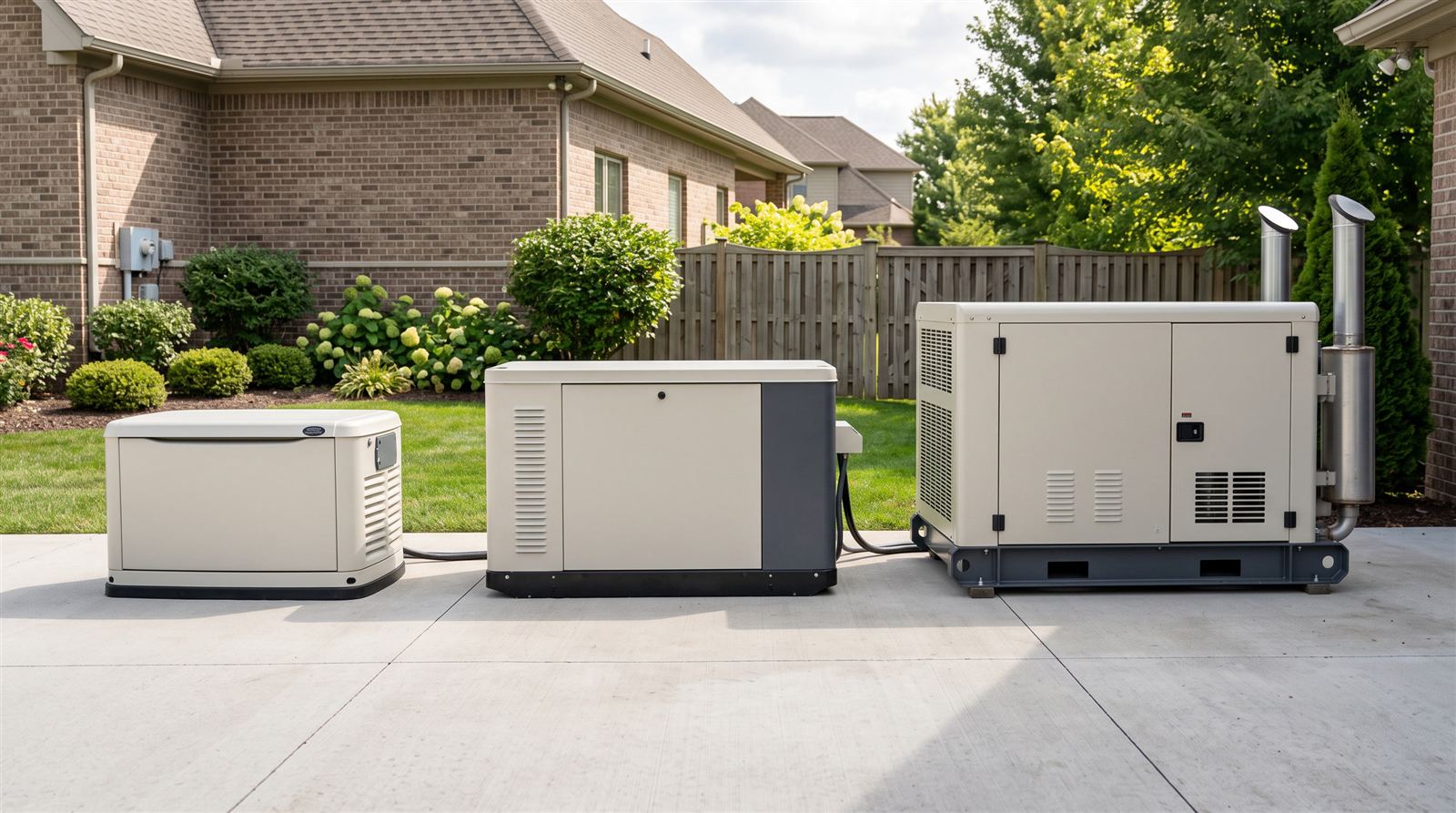
Dual-fuel standby generators are built to run on either natural gas or propane, giving homeowners flexibility that a single-fuel unit does not offer. That flexibility appeals to buyers worried about disruptions to one fuel source or another, but it is not automatically the right choice for every home — understanding how the switching actually works and what it costs compared to a single-fuel unit helps you decide if it is worth it for your situation.
How Dual-Fuel Generators Actually Work
A dual-fuel generator is engineered with a fuel system that can be configured or switched to run on either natural gas or propane, typically requiring the correct fuel-specific regulator and connection setup for whichever source is in use. Some models are field-convertible between the two fuels by a technician, while others require the installer to select and set up one fuel path with a straightforward path to switch later if needed. This is different from a generator that runs primarily on propane but could theoretically be modified — a true dual-fuel model is designed and rated by the manufacturer for both fuel types.
Note: not every generator marketed as flexible is actually rated by the manufacturer for both natural gas and propane operation — confirm dual-fuel capability directly on the current spec sheet for the exact model you are considering, rather than assuming based on general product category.
Why Homeowners Choose Dual Fuel
The core appeal is risk hedging. Natural gas is convenient because there is no tank to refill, but it depends entirely on the utility’s gas infrastructure staying operational, which can be a concern during a widespread disaster. Propane offers independence from the gas utility through an on-site tank, but requires monitoring tank levels and scheduling refills, and delivery trucks can themselves be delayed during severe weather events. A dual-fuel generator lets a homeowner hedge against either single point of failure, running on whichever fuel remains available.
This is particularly relevant in regions prone to hurricanes or severe winter storms, where both gas utility infrastructure and propane delivery logistics can be disrupted simultaneously or at different points during a prolonged event.
Cost Comparison: Dual Fuel vs Single Fuel
Dual-fuel capability generally adds to the upfront cost of the generator itself compared to an equivalent single-fuel model, reflecting the more complex fuel system engineering involved. Installation costs can also be somewhat higher if both a gas line connection and a propane tank and line are being set up to enable true switching capability, rather than just purchasing a dual-fuel-rated unit but only connecting one fuel source initially.
| Consideration | Single-Fuel Generator | Dual-Fuel Generator |
|---|---|---|
| Upfront generator cost | Generally lower | Generally higher for comparable size |
| Fuel flexibility | None — locked to one fuel type | Can switch between natural gas and propane |
| Installation complexity | Simpler, one fuel connection | More complex if both connections are installed |
| Best for | Homes confident in one fuel source’s reliability | Homes wanting a hedge against fuel disruption |
Brand Availability of Dual-Fuel Models
Dual-fuel capability is not universal across every manufacturer’s entire lineup — availability varies by brand and by specific model within a brand’s range, and tends to be more common in certain size classes than others. If dual-fuel flexibility is a priority, confirm which specific models in a given size range from Generac, Kohler, Cummins, or Briggs & Stratton are currently rated for dual-fuel operation, since this changes as product lines are updated, rather than assuming an entire brand’s lineup offers this feature.
When Dual Fuel Might Not Be Worth the Extra Cost
If you already have highly reliable natural gas service and no history of disruption in your area, or if you already have a large, reliably serviced propane tank and delivery relationship, the added cost of dual-fuel capability may not deliver enough practical benefit to justify the premium. Dual fuel tends to make the most sense specifically for homeowners in disaster-prone regions who want genuine redundancy, rather than as a default upgrade for every buyer.
Key Takeaways
- True dual-fuel generators are manufacturer-rated to run on either natural gas or propane, not just theoretically adaptable.
- The main appeal is hedging against disruption to either fuel source, particularly relevant in hurricane- or storm-prone regions.
- Dual-fuel models generally cost more upfront than comparable single-fuel units, and full switching capability may require both fuel connections installed.
- Dual-fuel availability varies by brand and model — confirm the specific unit’s current rated capability rather than assuming by brand.
- Dual fuel is most valuable for homeowners in disaster-prone areas; it may not be worth the added cost if you have highly reliable single-fuel service.
Frequently Asked Questions
Can any generator be converted to dual fuel?
No. True dual-fuel operation requires a generator engineered and rated by the manufacturer for both natural gas and propane, with the correct fuel-specific regulators and connections. Not every generator marketed with fuel flexibility is actually dual-fuel rated — confirm on the current spec sheet.
Does a dual-fuel generator need both a gas line and a propane tank installed?
To have full switching capability ready at any time, yes, both connections are typically needed. Some homeowners install a dual-fuel-rated unit but only connect one fuel source initially, planning to add the second connection later if needed, though that means the flexibility is not immediately available.
Is dual fuel worth the extra cost?
It depends on your risk profile. Homeowners in hurricane-prone or severe winter storm regions, or anywhere both natural gas and propane supply could realistically be disrupted, often find the redundancy worthwhile. Homeowners with highly reliable single-fuel service may not need the added cost.
Do all generator brands offer dual-fuel models?
Dual-fuel availability varies by brand and by specific model within a brand’s lineup, and is not universal across every product line. Confirm which specific models from your preferred brand and size range currently offer manufacturer-rated dual-fuel capability.
Does dual fuel affect how much power the generator produces?
Generally, a generator’s rated output can vary slightly depending on which fuel it is actively running on, since natural gas and propane have somewhat different energy characteristics. Check the manufacturer’s spec sheet for the rated output on each specific fuel type for the model you are considering.