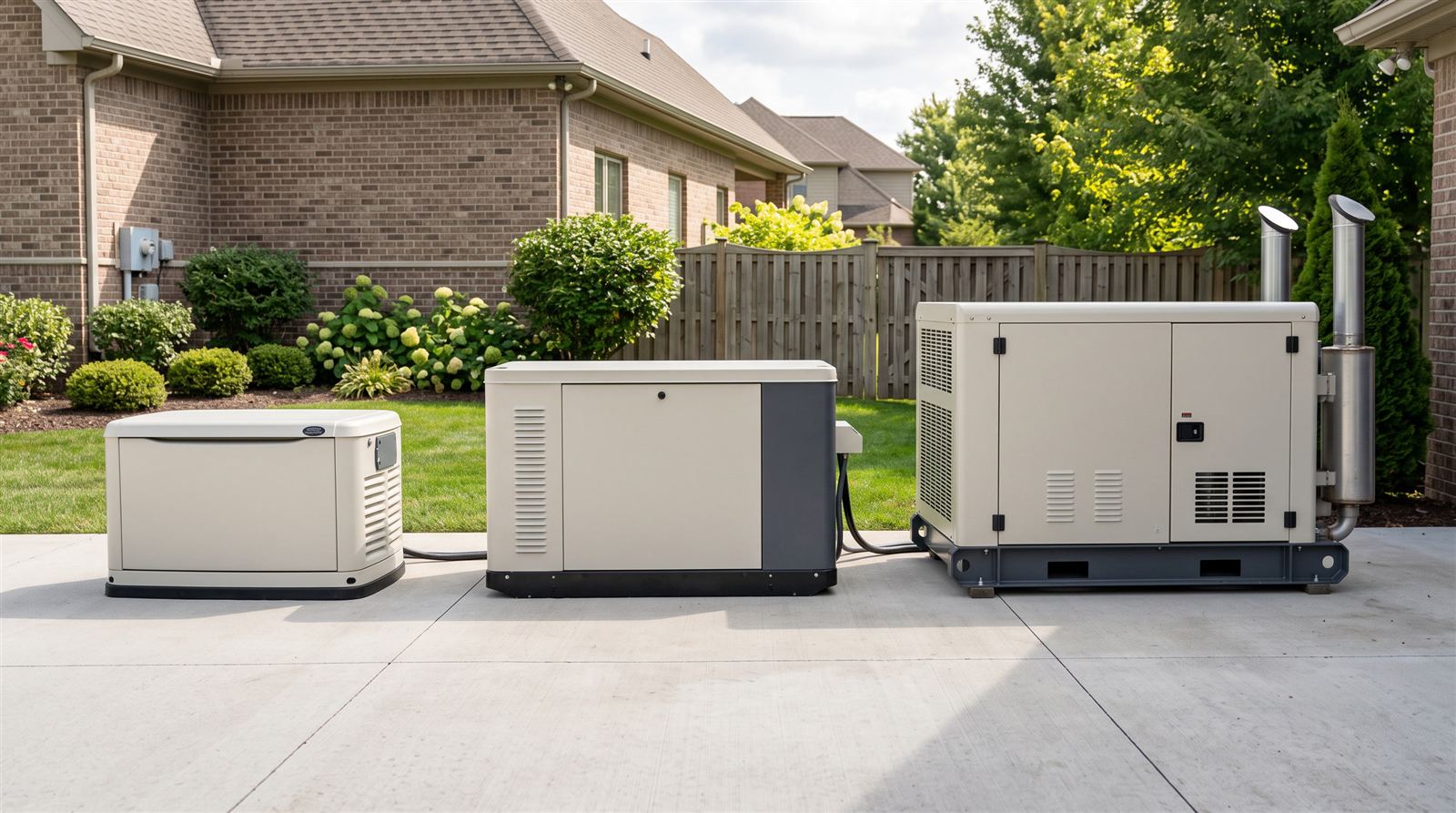
Homeowners who lose power regularly — because of an aging local grid, frequent storms, wildfire-related public safety shutoffs, or hurricane exposure along the Gulf Coast — need to think about standby generator selection differently than someone buying one as an occasional-use safety net. When a unit runs dozens of times a year instead of a handful, long-term reliability and duty-cycle durability matter more than a slightly lower upfront price.
What “Long-Term Reliability” Actually Depends On
Reliability for a frequently used standby generator comes down to a combination of factors: the generator being correctly sized for the load it actually runs (not undersized and constantly strained), a fuel supply that keeps up with more frequent, sometimes longer run cycles, and a maintenance schedule that keeps pace with the added wear from heavier use. A premium brand name does not substitute for any of these three factors — an oversized, well-maintained mid-tier unit will typically outlast an undersized, neglected premium one.
How Frequent Use Changes Maintenance Needs
Manufacturers publish maintenance intervals, typically involving oil changes and inspections, based on running hours rather than calendar time alone. A generator that runs occasionally for brief self-tests accumulates hours slowly, while a unit in a high-outage area can rack up running hours much faster, which means maintenance intervals arrive sooner in calendar time than a homeowner might expect from general marketing materials. Skipping or delaying maintenance on a frequently used unit is one of the most common causes of premature failure, regardless of brand.
Note: always follow the specific running-hours-based maintenance schedule in your unit’s owner’s manual, not a generic calendar reminder, since actual service intervals depend on your unit’s accumulated run time.
Brand Considerations for Heavy-Use Scenarios
All four major manufacturers — Generac, Kohler, Cummins, and Briggs & Stratton — build generators intended to handle regular use, but installers in high-outage regions frequently note that liquid-cooled systems from any brand tend to handle sustained, heavier-than-average duty cycles better than smaller air-cooled units pushed near their limits repeatedly. Cummins’s commercial engine heritage and Kohler’s reputation for build quality are both commonly cited by installers serving disaster-prone regions, though Generac’s liquid-cooled lineup and larger dealer network — which matters a great deal for fast service response after a storm — are also strong considerations. No manufacturer publishes independently verified data proving a definitive reliability edge over competitors in heavy-use conditions specifically, so local installer experience in your specific region is a valuable, underused data point.
| Consideration | Why It Matters for Frequent Outages |
|---|---|
| Correct sizing (not undersized) | Prevents chronic overload stress that accelerates wear |
| Fuel type and supply reliability | Propane tank capacity or gas utility reliability affects sustained runtime |
| Maintenance interval tracking | Heavier use reaches service intervals faster in calendar time |
| Local dealer response time | Faster post-storm service matters more when outages are frequent |
| Cooling type at larger sizes | Liquid-cooled units generally handle sustained heavier loads better |
Fuel Supply Reliability for Frequent Users
If your area’s outages are often tied to the same events that could also disrupt fuel delivery — for example, hurricane conditions that ground propane delivery trucks, or a natural gas utility itself affected by the same storm — your fuel plan deserves as much attention as the generator itself. Homeowners in high-outage, storm-prone areas sometimes choose a larger on-site propane tank specifically to extend independence from delivery disruptions, or a dual-fuel unit to hedge against either supply being unavailable when needed most.
Dealer Response Time as a Reliability Factor
In a high-outage region, how quickly a local dealer can respond to a service call after a storm is arguably as important as the generator’s inherent build quality, since a broken unit sitting unrepaired for weeks defeats the purpose of having backup power at all. Ask prospective installers directly about their typical post-storm service response times and whether they prioritize existing customers during high-demand periods, since this varies significantly between dealers regardless of the brand they sell.
Key Takeaways
- Correct sizing and consistent maintenance matter more for long-term reliability than brand name alone, especially under frequent use.
- Heavy use reaches manufacturer maintenance intervals faster in calendar time — follow running-hours-based schedules, not generic reminders.
- Liquid-cooled systems generally handle sustained heavier duty cycles better than air-cooled units pushed near their limits repeatedly.
- No manufacturer publishes independently verified data proving a definitive reliability edge in heavy-use conditions — local installer experience is a valuable data point.
- Dealer post-storm response time can matter as much as the generator’s build quality in high-outage regions.
Frequently Asked Questions
Which generator brand lasts longest under frequent use?
No manufacturer publishes independently verified data proving a clear durability advantage specifically under frequent, heavy use. Correct sizing, consistent running-hours-based maintenance, and dealer service response time generally matter more for long-term reliability than brand choice alone.
Should I buy a bigger generator than I need if I lose power often?
Sizing to your correctly calculated load, with reasonable headroom rather than significant oversizing, is usually the better approach. A correctly sized unit run within its intended capacity tends to hold up better over time than either a chronically overloaded undersized unit or an unnecessarily oversized one.
Do generators need more maintenance in high-outage areas?
Not more frequently by calendar necessarily, but they accumulate running hours faster, which means manufacturer-specified, hours-based maintenance intervals arrive sooner than a generic annual reminder might suggest. Track actual running hours rather than relying purely on the calendar.
Is propane or natural gas more reliable for frequent outages?
Natural gas offers continuous supply as long as the utility is operating, while propane requires monitoring a tank’s level, but gives you independence from the gas utility. In areas where the same disasters that cause outages could also disrupt either fuel supply, some homeowners choose dual-fuel units or larger propane tanks to hedge against that risk.
How important is dealer response time compared to the generator brand?
In frequently affected areas, dealer response time can matter just as much as generator build quality, since a broken unit that sits unrepaired for weeks provides no benefit. Ask prospective installers about their typical post-storm service response before choosing based on brand alone.