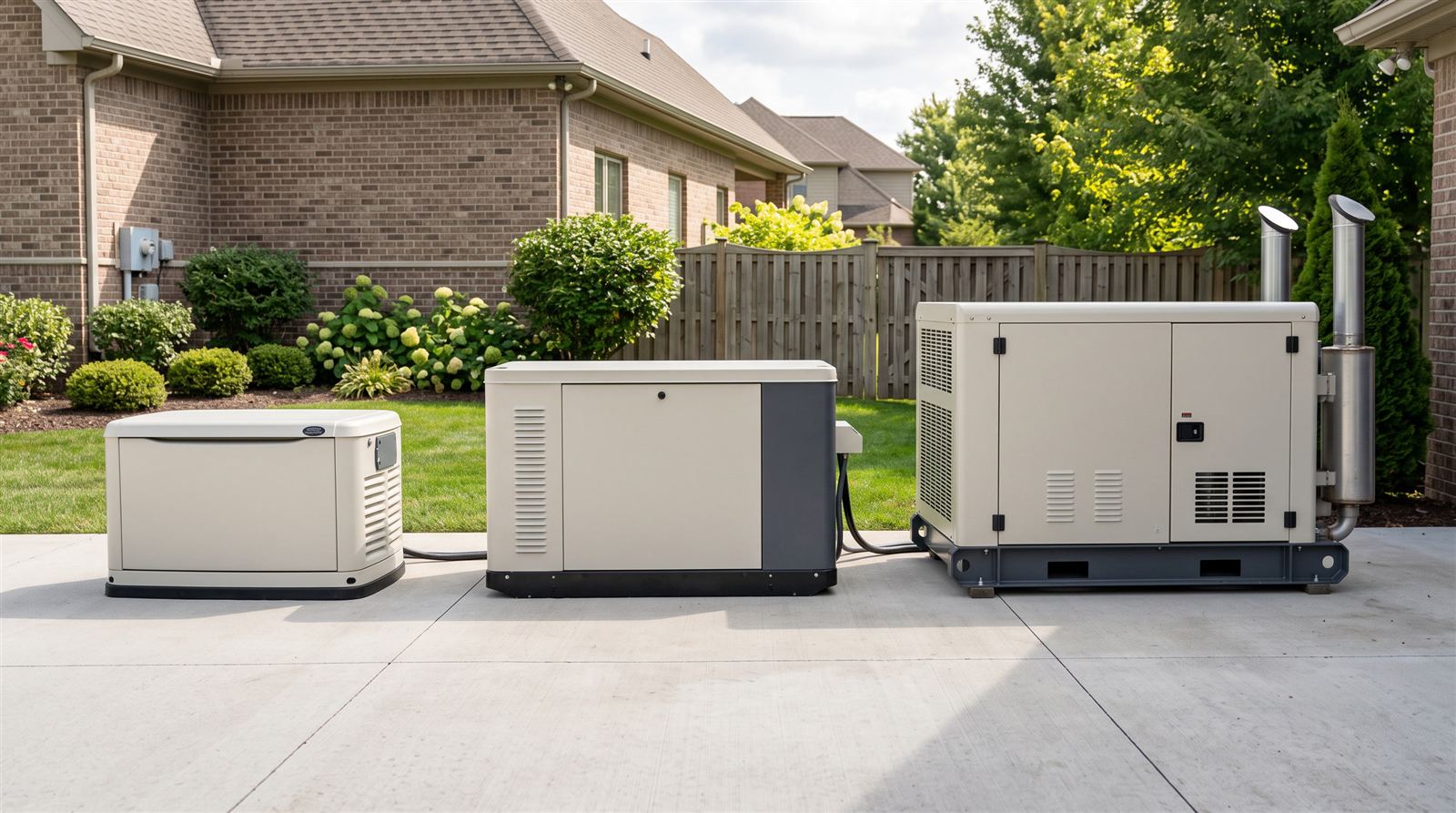
Shopping for a whole-house standby generator in 2026 means sorting through a handful of major manufacturers, three different fuel options, a wide range of output sizes, and installed prices that can vary by tens of thousands of dollars depending on your home and local labor market. This guide is a starting point: it lays out how the major brands generally compare, how to think about sizing and fuel choice, and which specific comparisons matter most for your situation, with links to deeper coverage on each topic.
How the Major Brands Generally Compare
The residential standby generator market in the United States is dominated by a small number of manufacturers, each with a somewhat different reputation among installers and homeowners.
- Generac is the volume leader in air-cooled residential standby generators, with the widest dealer network in the country. Its air-cooled line is generally positioned as a value-to-mid-tier option, and its liquid-cooled line competes at the higher end for larger homes.
- Kohler is often described by installers as slightly more refined in fit and finish, with a strong reputation in its liquid-cooled range, and is frequently chosen by buyers who prioritize a quieter running unit or who already have a relationship with a Kohler-certified dealer.
- Cummins brings a heavier industrial and commercial engine pedigree to its residential lineup and is often positioned as a premium option, particularly for larger homes or buyers who want a generator built on the same engine platforms used in commercial backup power.
- Briggs & Stratton tends to compete more directly on price in the air-cooled category and is a common choice for homeowners prioritizing a lower total installed cost over brand prestige.
- Tesla Powerwall and similar battery systems are not generators at all — they are battery storage systems, often paired with solar, and represent a genuinely different backup power category worth comparing before you commit to a fuel-burning generator.
None of these general reputations should be treated as a guarantee about any specific model year or unit — always confirm current specifications, warranty terms, and pricing directly with a manufacturer’s current spec sheet or an authorized dealer, since product lines and pricing change from year to year.
Sizing: Matching a Generator to Your Home
Standby generators are sized in kilowatts (kW), and the right size depends on your home’s square footage, whether you want to run central air conditioning, and how many major appliances need to run simultaneously.
| Home Profile | Typical Generator Size | Notes |
|---|---|---|
| Small home, essential circuits only | 10-14 kW | Covers fridge, well pump, some lighting, and a furnace blower |
| Mid-size home (around 2,000 sq ft) | 16-20 kW | Often covers most of the home including one central AC unit |
| Larger home (3,000+ sq ft) | 22-26 kW | May still require load management for multiple large HVAC units |
| Large home with multiple AC units or a well | 26-38+ kW | Usually requires a professional load calculation, not a size chart |
These are general starting points, not a substitute for a load calculation performed by a licensed electrician or your installer, since actual demand depends on your specific appliances, HVAC equipment, and whether you use a load management device to stagger high-draw circuits.
Fuel Type: Natural Gas, Propane, or Dual Fuel
Most standby generators run on natural gas, liquid propane, or are built as dual-fuel units that can switch between the two.
- Natural gas offers an effectively unlimited fuel supply as long as utility service is intact, with no tank to refill, but it depends on the gas utility staying operational during a widespread disaster.
- Propane requires an on-site tank (commonly 250-500 gallons for a whole-house unit) that you own or lease, giving you fuel independence from the utility grid, at the cost of needing to monitor tank levels and schedule refills.
- Dual-fuel units offer flexibility to switch fuel sources, which can be valuable in regions where either gas supply or propane delivery could be disrupted, though dual-fuel capability is not universal across every manufacturer’s lineup.
Noise, Footprint, and Neighborhood Considerations
Standby generators run considerably louder than the whisper-quiet portable inverter generators marketed for camping, and most air-cooled residential units are generally reported to produce noise in a range that is noticeable at typical property line setbacks, though the exact decibel rating varies by model, load, and distance measured. If you live in a neighborhood with an HOA or tight lot lines, noise and setback rules deserve early attention, before you fall in love with a specific unit.
Note: always confirm the manufacturer’s current published decibel rating, measured at a specific distance, rather than relying on general reputation, since ratings vary meaningfully by model and load level.
Price Tiers: What Installed Cost Actually Looks Like
Total installed cost for a whole-house standby generator typically falls between roughly $3,000 and $12,000 or more, depending on generator size, fuel line work, electrical panel upgrades, concrete pad work, and local permit and labor costs. Air-cooled units in the smaller size range tend to sit toward the lower end of that range installed, while larger liquid-cooled systems, multi-trade electrical work, or difficult site conditions can push a project well beyond it. Getting at least three quotes from licensed local installers remains the most reliable way to understand real pricing in your specific market.
Choosing the Right Comparison for Your Situation
Because “best generator” means different things depending on your home, budget, and goals, this hub links to more specific comparisons worth reading before you buy: Generac against Kohler and against Cummins for brand-level differences, Briggs & Stratton against Generac for a value-focused comparison, portable against standby for buyers still deciding on the right category, sizing guides for 2,000 square foot and 3,000-plus square foot homes, quiet-running options for tight neighborhoods, dual-fuel models, solar generators and battery systems like Tesla Powerwall as fuel-free alternatives, budget-friendly but reliable units, smart Wi-Fi-enabled models, RV and off-grid options, and honest looks at extended warranties and real homeowner experience after the purchase.
Key Takeaways
- Generac, Kohler, Cummins, and Briggs & Stratton each have a general market position, but always verify current specs, pricing, and warranty terms directly rather than relying on brand reputation alone.
- Correct sizing depends on a real load calculation, not just square footage — get a professional assessment before committing to a kW rating.
- Natural gas, propane, and dual-fuel each carry different tradeoffs around fuel independence and supply risk.
- Installed cost typically runs $3,000-$12,000+, and getting multiple local quotes is the best way to understand your real price.
- Battery systems like Tesla Powerwall are a fundamentally different backup power category worth comparing before you commit to a combustion generator.
Frequently Asked Questions
Which generator brand is the best overall?
There is no single best brand for every homeowner — Generac tends to lead on dealer availability and value, Kohler and Cummins are often positioned at a more premium tier, and Briggs & Stratton frequently competes on price. The right choice depends on your budget, home size, and which dealers actually service your area well.
How much generator do I need for my house?
Most homeowners in a mid-size home land somewhere in the 16-20 kW range for near-whole-house coverage, but the only reliable way to size a unit is a load calculation from a licensed electrician or installer based on your specific appliances and HVAC equipment.
Is natural gas or propane better for a standby generator?
Natural gas is more convenient because there is no tank to refill, but it depends on utility service staying intact. Propane gives you an independent fuel supply you control, at the cost of tank monitoring and periodic refills. Some homeowners choose dual-fuel units specifically to hedge against either risk.
Are battery backup systems like Tesla Powerwall a real alternative to a generator?
They can be, particularly for homeowners focused on shorter, more frequent outages or who already have or want solar panels, but battery systems have finite stored capacity and different runtime characteristics than a fuel-fed generator. Which one “wins” depends heavily on your outage patterns and budget.
How many quotes should I get before choosing an installer?
Most industry guidance suggests getting at least three quotes from licensed local installers, since installed pricing for the same generator size can vary significantly based on site conditions, electrical panel work needed, and local labor rates.