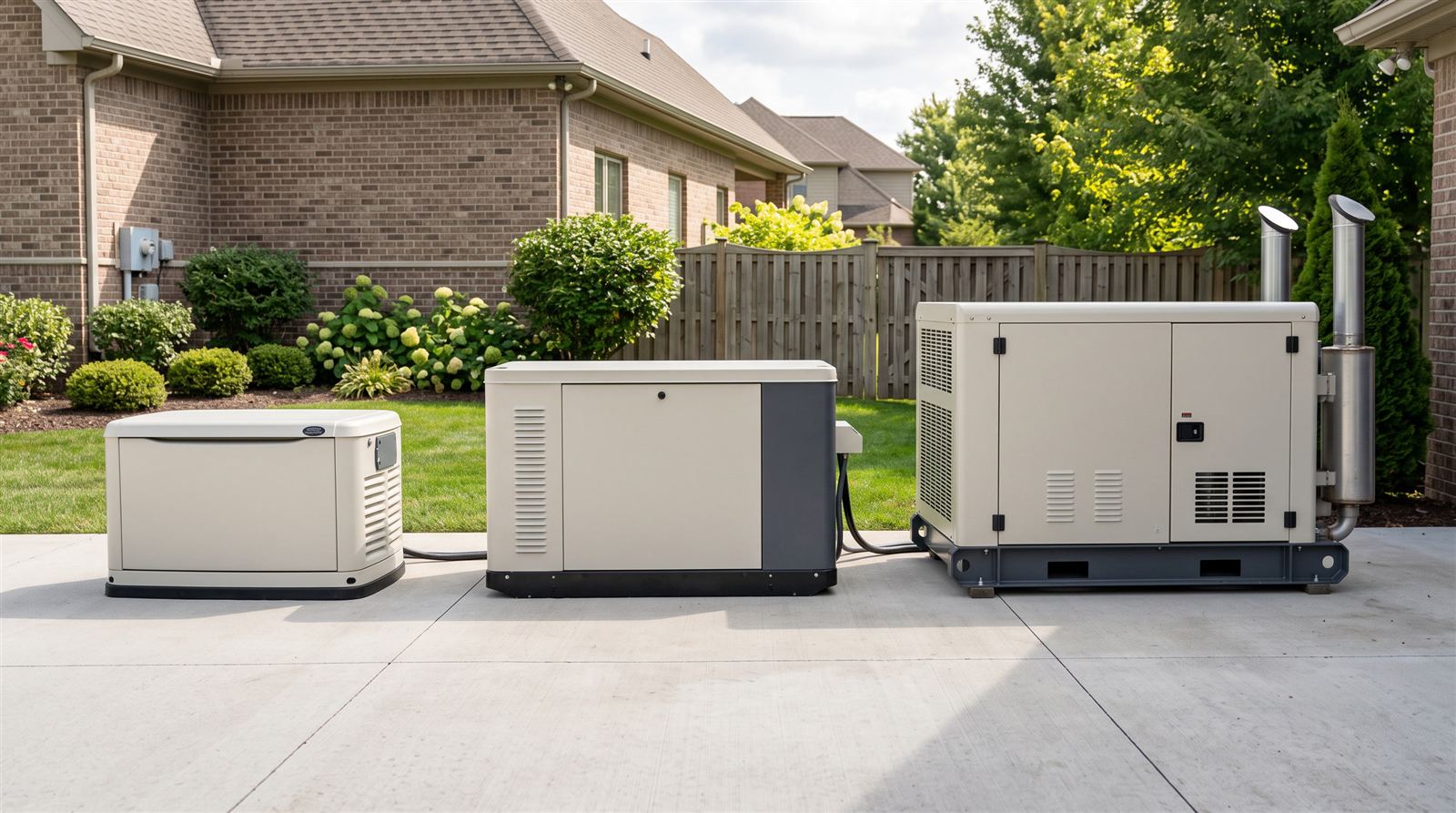
Generator needs for an RV or an off-grid property look quite different from a typical suburban home wired for a standby system, since portability, fuel logistics, and the absence of a permanent utility connection all change the calculus. While this site generally focuses on whole-house standby generators for grid-connected homes, RV owners and off-grid property owners considering a more permanent power solution should understand how their needs diverge from a typical homeowner’s before choosing equipment.
How RV Power Needs Differ From a House
An RV’s electrical system is built around a much smaller load than a house — lighting, a compact refrigerator, an air conditioning unit or two, charging electronics, and sometimes a microwave or induction cooktop. This means RV owners are usually better served by portable or inverter generators sized in the range of a couple thousand watts to a few thousand watts, rather than a whole-house-scale standby unit designed for a residential electrical panel. Inverter generators in particular are popular for RV use because they produce cleaner, more stable power suited to sensitive electronics, and many models are designed to be quieter and more fuel-efficient at partial loads than a comparable non-inverter portable unit.
How Off-Grid Home Power Needs Differ
An off-grid house, by contrast, may have electrical demand much closer to a standard grid-connected home, but without a utility connection to fall back on at all. This makes the generator (or generator paired with a battery and solar system) the primary power source rather than a backup, which changes the reliability and duty-cycle expectations considerably. Off-grid properties often benefit from the same sizing logic used for whole-house standby generators — a real load calculation based on actual appliances — but need to plan for the generator running far more total hours over its lifetime than a typical grid-connected backup unit would.
| Situation | Typical Power Need | Common Solution |
|---|---|---|
| RV, weekend or occasional use | Roughly 2,000-4,000 watts | Portable or inverter generator |
| RV, frequent full-time living | Higher continuous demand, especially with AC | Larger inverter generator or dual-unit setup |
| Off-grid cabin, minimal appliances | Modest, intermittent demand | Portable generator, often paired with solar/battery |
| Off-grid full-time residence | Comparable to a small grid-connected home | Larger generator or hybrid solar/battery/generator system |
Fuel Considerations for Mobile and Remote Use
RV generators typically run on gasoline, propane, or are built into the RV’s chassis running off the vehicle’s fuel system, and fuel availability while traveling is a real practical constraint — running low on generator fuel in a remote area is a different problem than running low at home near a gas station. Off-grid properties face a related but distinct challenge: without utility natural gas service in most cases, fuel is almost always propane, delivered and stored on-site, which means tank capacity and delivery logistics deserve careful planning, especially for properties in areas where delivery trucks have limited or seasonal access.
Standby Generators for Off-Grid Homes
For off-grid homes with electrical demand closer to a typical house, a standby-style generator sized similarly to a grid-connected home’s system can make sense, particularly when paired with a solar and battery system that reduces how many hours the generator itself needs to run. In this hybrid setup, the generator acts as a backstop for extended periods without sufficient sun, rather than running continuously as the sole power source, which meaningfully extends its service life and reduces fuel consumption and maintenance frequency.
Note: off-grid electrical and fuel storage setups often involve different code requirements than a standard grid-connected home installation — confirm current local and state requirements for off-grid propane storage and generator installation with your local building department before finalizing a system design.
Noise and Environmental Considerations
Both RV and off-grid settings often place a premium on quieter operation, whether to be considerate of nearby campers and neighbors or simply because remote, quiet settings make generator noise more noticeable than in a typical neighborhood. Inverter generators are generally the preferred technology for RV use specifically because of their comparatively lower noise profile at partial loads, though exact decibel figures vary by model and should be checked directly against the manufacturer’s current spec sheet.
Key Takeaways
- RVs are generally best served by portable or inverter generators sized for a few thousand watts, not a whole-house-scale standby unit.
- Off-grid homes with demand closer to a typical house may benefit from standby-style sizing logic, ideally paired with solar and battery to reduce generator run hours.
- Fuel logistics — gasoline or propane availability while traveling, or propane tank capacity and delivery access off-grid — deserve as much planning as generator size.
- Inverter generators are popular for RV use due to cleaner power output and typically quieter operation at partial loads.
- Off-grid propane storage and generator installation may carry different code requirements than a standard grid-connected home — confirm with your local building department.
Frequently Asked Questions
What size generator do I need for my RV?
Most RVs are well served by portable or inverter generators in the roughly 2,000-4,000 watt range, though larger RVs with multiple air conditioning units or full-time living demands may need a larger unit or a dual-generator setup. Check your RV’s specific electrical demand, especially air conditioning start-up wattage, before choosing a size.
Can I use a whole-house standby generator for an off-grid home?
Yes, particularly for off-grid homes with electrical demand similar to a typical house. Many off-grid properties pair a generator with solar panels and battery storage so the generator only needs to run when solar and battery capacity are insufficient, which extends its service life and reduces fuel use.
Why are inverter generators recommended for RVs specifically?
Inverter generators produce cleaner, more stable electrical output that is gentler on sensitive RV electronics, and many models run quieter and more fuel-efficiently at partial loads compared to standard portable generators, which matters in campgrounds and quiet outdoor settings.
What fuel is best for an off-grid property generator?
Most off-grid properties without natural gas utility service rely on propane, stored in an on-site tank. Planning tank size and delivery access, especially for remote properties with limited road access in certain seasons, is an important part of an off-grid power plan.
Are there different code requirements for off-grid generator installations?
Often, yes. Off-grid propane storage and generator setups can involve different requirements than a standard grid-connected home installation. Confirm current local and state rules with your building department before finalizing your system design.