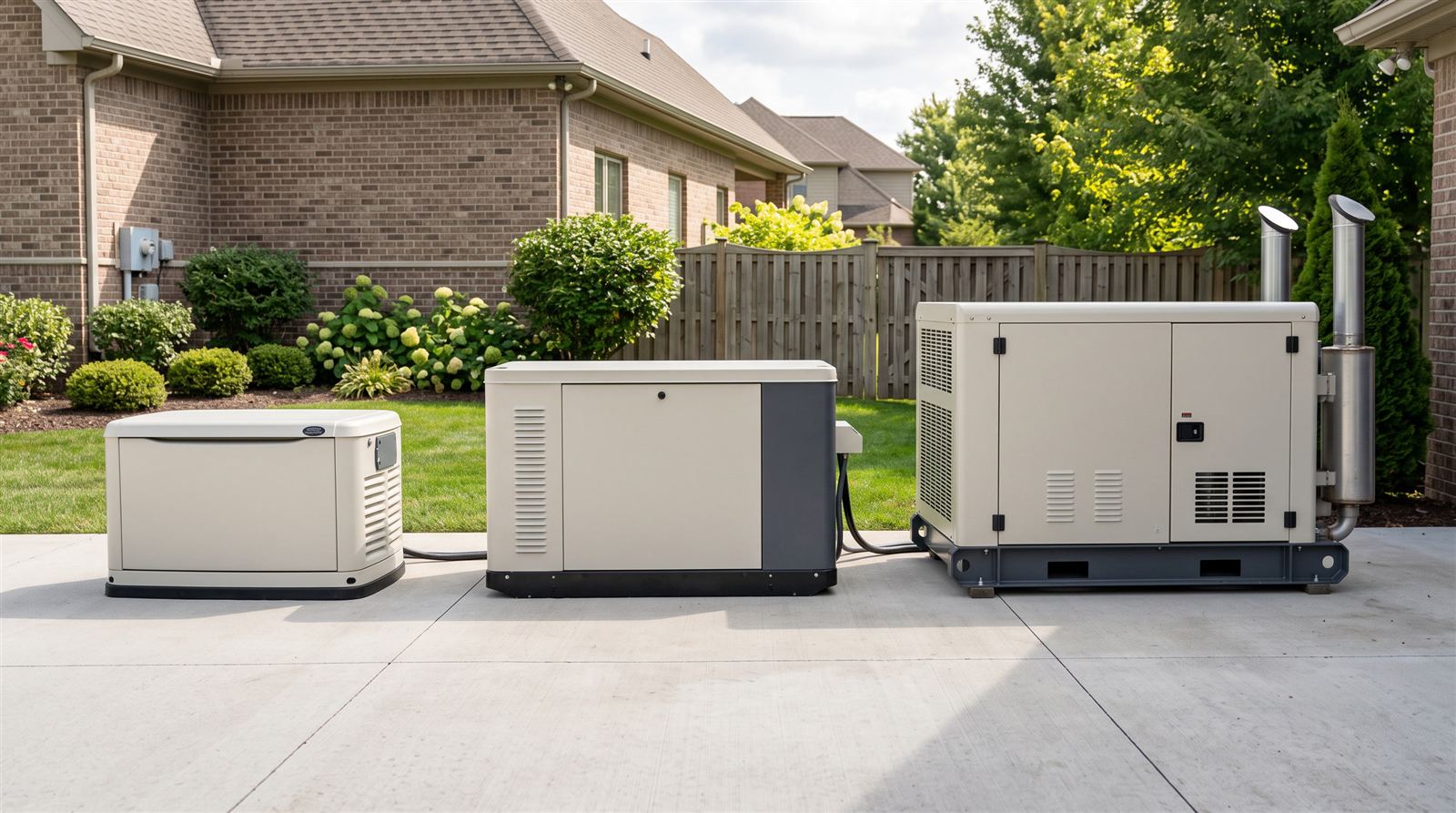
The term “solar generator” covers a wide range of products, from portable battery packs with a small folding solar panel that can charge a phone and a few small devices, to larger home battery systems designed to be charged by rooftop solar and provide meaningful backup power for parts of a house. Understanding which category a given product actually falls into matters more than the “solar generator” label itself when deciding whether one can realistically serve as your home’s backup power source.
What “Solar Generator” Actually Means
Unlike a traditional standby generator, a solar generator does not burn fuel at all — it is a battery paired with an inverter, charged either by an included or separately purchased solar panel, by plugging into wall power ahead of time, or both. Because there is no combustion involved, these systems produce no exhaust and can safely be used indoors, which is a meaningful safety advantage over portable fuel generators. The tradeoff is that they store a finite amount of energy and cannot simply “refuel” the way a fuel generator can, unless enough sunlight and solar panel capacity are available to recharge them during an extended outage.
Portable Solar Generators vs Whole-Home Battery Systems
Smaller portable solar generators, often marketed for camping, RVs, or emergency kits, typically store enough energy to run a handful of small devices, charge phones and laptops, and power a CPAP machine or similar small medical device for a period of time, but they generally cannot support large appliances like a refrigerator, well pump, or central air conditioning for an extended outage. Whole-home battery systems, like Tesla Powerwall and comparable products from other manufacturers, are installed similarly to a standby generator’s electrical connection and can power a larger set of circuits, particularly when paired with rooftop solar that can recharge the battery during daylight hours of a multi-day outage.
| System Type | Typical Use Case | Real-World Capacity |
|---|---|---|
| Small portable solar generator | Camping, small devices, phones, medical devices | Hours of power for select small devices |
| Larger portable solar generator | Short outages, several appliances | Several hours to about a day for select circuits, depending on load |
| Whole-home battery system (e.g., Tesla Powerwall) | Whole-home or major-circuit backup | Extends significantly if paired with solar recharging during the outage |
Capacity Limits You Need to Understand Before Buying
The single most important thing to understand about any solar generator or battery system is that its backup duration depends entirely on stored capacity versus your actual power draw, and whether solar recharging is realistically available during your outage. A battery system sized generously for typical daily use can still run out well before a multi-day outage ends if skies are overcast, your solar panel capacity is modest, or your load draws down the battery faster than sunlight can replace it. Always ask for real capacity numbers in kilowatt-hours and compare that against your actual expected daily energy use, not just a general “backup power” marketing claim.
Note: never treat manufacturer-stated runtime estimates as guaranteed — actual backup duration depends heavily on your specific appliance load, weather conditions for solar recharging, and battery age and condition.
Solar Generators vs Fuel-Burning Standby Generators
Fuel-burning standby generators can generally run continuously for as long as fuel supply lasts, which for a natural gas connection is effectively unlimited and for a propane tank can be many days depending on tank size and load. Battery-based solar generators are fundamentally limited by stored capacity and recharging rate, which makes them better suited to homes with modest backup needs, frequent shorter outages, or strong solar recharging potential, rather than as a guaranteed solution for extended multi-day outages with poor sunlight.
Cost is also a significant factor: a whole-home battery system with meaningful capacity is often priced at a premium comparable to or exceeding a mid-size standby generator installation, particularly once solar panels are factored in if you do not already have them installed.
Who Solar Generators Make the Most Sense For
Homeowners who already have or are planning solar panels, experience mostly shorter outages, want a no-exhaust option for safety or noise reasons, or want to reduce reliance on fossil fuels are the best fit for a solar-based backup system. Homeowners in areas with frequent extended multi-day outages, especially in climates with less reliable sunlight during storm season, should carefully evaluate real capacity numbers against their expected needs, or consider pairing a smaller battery system with a fuel-based generator for extended-outage coverage.
Key Takeaways
- “Solar generator” ranges from small portable battery packs to full whole-home battery systems — the category matters more than the label.
- Solar generators produce no exhaust and can be used indoors, unlike fuel-burning portable generators.
- Real backup duration depends on stored capacity, actual load, and available sunlight for recharging — never rely on marketing runtime claims alone.
- Fuel-burning generators generally offer more reliable extended-outage runtime; battery systems are strongest for shorter outages or when paired with solar.
- Whole-home battery systems can be priced comparably to or higher than a mid-size standby generator installation, especially with added solar panels.
Frequently Asked Questions
Can a solar generator power my whole house?
Small portable solar generators generally cannot power whole-house loads. Larger whole-home battery systems, especially when paired with solar panels, can power a meaningful set of circuits, but whether that reaches “whole house” coverage depends on the specific system’s capacity and your actual electrical demand.
How long will a solar generator last during an outage?
It depends entirely on stored capacity, your actual power draw, and how much solar recharging is realistically available during the outage. Overcast conditions during a storm can significantly reduce recharging, so treat manufacturer runtime estimates as best-case rather than guaranteed figures.
Is a solar generator safer than a fuel generator?
Solar generators produce no combustion exhaust, which removes the carbon monoxide risk associated with fuel-burning portable generators, making them safe to use indoors. They still carry standard battery and electrical safety considerations, so follow the manufacturer’s guidance regardless.
Is Tesla Powerwall considered a solar generator?
Tesla Powerwall is a home battery storage system, most commonly paired with solar panels, and functions similarly to what people often mean by a whole-home “solar generator.” It is a different category than a fuel-burning standby generator, with different capacity and runtime characteristics.
Should I get a solar generator instead of a standby generator?
It depends on your outage patterns and budget. Solar and battery systems work well for shorter outages, homes with solar already installed, or buyers prioritizing no-exhaust operation. Homes facing frequent extended multi-day outages may still be better served by a fuel-burning standby generator, or a combination of both technologies.