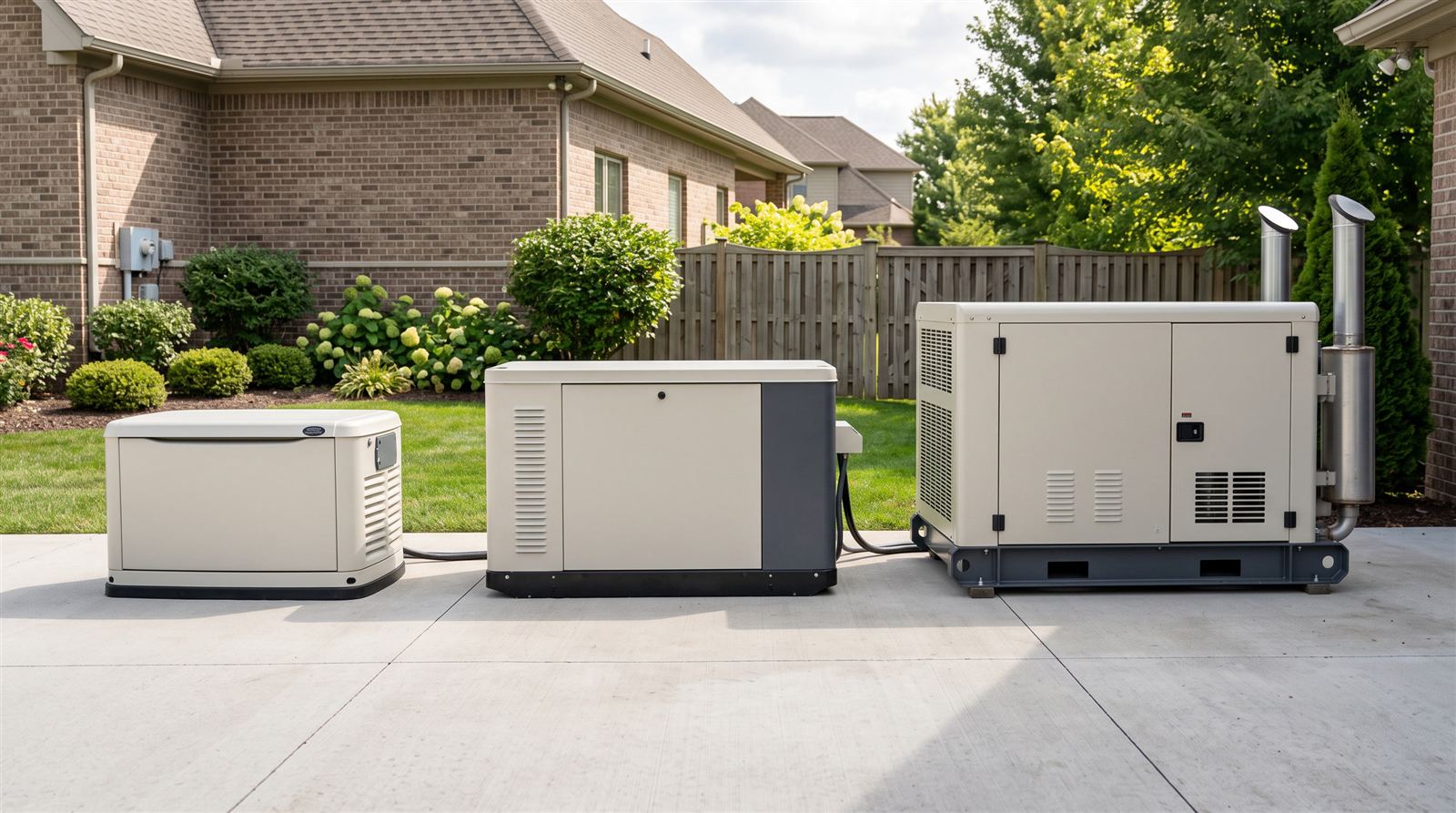
Homes over 3,000 square feet typically push standby generator sizing into a range where the decisions get more complex than picking a size off a general chart. Multiple HVAC zones, larger electrical panels, well pumps, pools, and bigger appliance loads all factor in, and at this size the choice between a large air-cooled unit and a liquid-cooled system becomes a real consideration rather than an afterthought.
Typical Power Needs for Homes Over 3,000 Sq Ft
Larger homes generally require standby generators in the 22-26 kW range at minimum for meaningful whole-house coverage, and homes with multiple central air conditioning units, electric heat, a well pump, or other heavy continuous loads often need 26 kW or considerably more. Some very large homes with multiple HVAC zones and heavy simultaneous loads require systems in the 38 kW-plus range, which starts to move toward liquid-cooled or even light commercial-grade equipment.
| Home Configuration | Typical Generator Size |
|---|---|
| 3,000-3,500 sq ft, one or two AC units | 22-26 kW |
| 3,500-4,500 sq ft, multiple AC zones | 26-32 kW |
| 4,500+ sq ft or heavy continuous loads (well pump, pool, multiple zones) | 32-38+ kW |
These ranges are general guidance only. At this home size, a professional load calculation is not optional — the variation in appliance mix, HVAC zoning, and simultaneous demand between two similarly sized large homes can be substantial.
Air-Cooled vs Liquid-Cooled at This Size
Smaller and mid-size homes are almost always served well by air-cooled generators, but larger homes are where the air-cooled versus liquid-cooled decision becomes genuinely relevant. Liquid-cooled generators generally offer higher continuous output capacity, are often built with more robust engines suited to running for extended periods under heavier sustained loads, and are the standard choice once total demand climbs into the higher kW ranges. The tradeoff is a meaningfully higher upfront cost and a larger physical footprint than an air-cooled unit.
Some large homes can still be served by a large air-cooled unit, particularly if a load management device is used to stagger HVAC zones and prevent every unit from starting simultaneously. Whether that approach makes sense for your home is a conversation to have directly with your installer during the load calculation.
Brand Considerations for Larger Homes
All four major manufacturers — Generac, Kohler, Cummins, and Briggs & Stratton — offer larger air-cooled or liquid-cooled options, but their depth of lineup at the top end varies. Cummins and Kohler are frequently recommended by installers specifically for larger homes, partly due to reputation in the liquid-cooled segment and partly due to engine heritage in Cummins’s case. Generac also offers an extensive liquid-cooled lineup and remains competitive at this size with the advantage of a larger dealer network. Briggs & Stratton’s residential standby lineup is generally more limited at the largest size tiers, so confirm current model availability with a local dealer if you are considering that brand for a large home.
Price Expectations for Larger Homes
Installed cost for a properly sized generator on a home over 3,000 square feet typically trends toward the upper half of the broader $3,000-$12,000+ installed range, and liquid-cooled systems for very large homes can exceed that range considerably once you factor in the generator itself, more extensive electrical work, larger gas line requirements, and bigger concrete pad work. Getting multiple quotes matters even more at this size, since the price spread between installers for large systems tends to be wider than for smaller, more standardized air-cooled installations.
Note: for large liquid-cooled installations, also ask about ongoing maintenance costs, since these systems often have more involved service requirements than smaller air-cooled units — confirm current service intervals and typical costs directly with your installer.
Electrical Panel and Gas Supply Considerations
Larger homes are more likely to need an electrical panel upgrade or a subpanel reconfiguration to properly integrate a large generator and transfer switch, and larger generators demand more gas volume, which sometimes requires the utility to upsize your gas meter or service line. Both of these factors can add meaningfully to project cost and timeline, and are worth discussing early in the site survey process rather than discovering them mid-installation.
Key Takeaways
- Homes over 3,000 sq ft typically need at least 22-26 kW, with larger or heavily loaded homes requiring 26-38+ kW.
- Liquid-cooled generators become a serious consideration at this size due to higher continuous output capacity, though at a higher cost and footprint.
- Cummins and Kohler are frequently recommended by installers for larger homes, but Generac’s liquid-cooled lineup is also extensive and competitive.
- Installed cost trends toward the upper half of the broader price range, and can exceed it for large liquid-cooled systems.
- Panel upgrades and gas meter upsizing are more common at this size and should be discussed during the initial site survey.
Frequently Asked Questions
What size generator do I need for a house over 3,000 square feet?
Most homes in this range need at least 22-26 kW, and homes with multiple HVAC zones, a well pump, or other heavy continuous loads often need 26-38 kW or more. A professional load calculation is strongly recommended given the wider variation in appliance mix at this home size.
Do I need a liquid-cooled generator for a large home?
Not always, but it becomes a much more relevant consideration than for smaller homes. Liquid-cooled units generally handle higher continuous loads better and are the standard choice once total demand climbs into the higher kW ranges, though a large air-cooled unit with load management can sometimes still work.
Which brand is best for a large home?
Cummins and Kohler are often specifically recommended by installers for larger homes, and Generac’s extensive liquid-cooled lineup is also competitive at this size. The right choice depends on local dealer availability, your specific load calculation, and price quotes from multiple brands.
How much more does a generator cost for a bigger house?
Installed cost for larger homes generally trends toward the upper half of the broader $3,000-$12,000+ range, and liquid-cooled systems for very large homes can exceed that range once electrical work, gas line upsizing, and larger pad requirements are factored in.
Will I need to upgrade my electrical panel for a large generator?
It is more common at this home size than for smaller homes, since larger generators and their transfer switches sometimes require additional panel capacity or reconfiguration. Your installer’s site survey should identify this early, before you finalize a contract or budget.