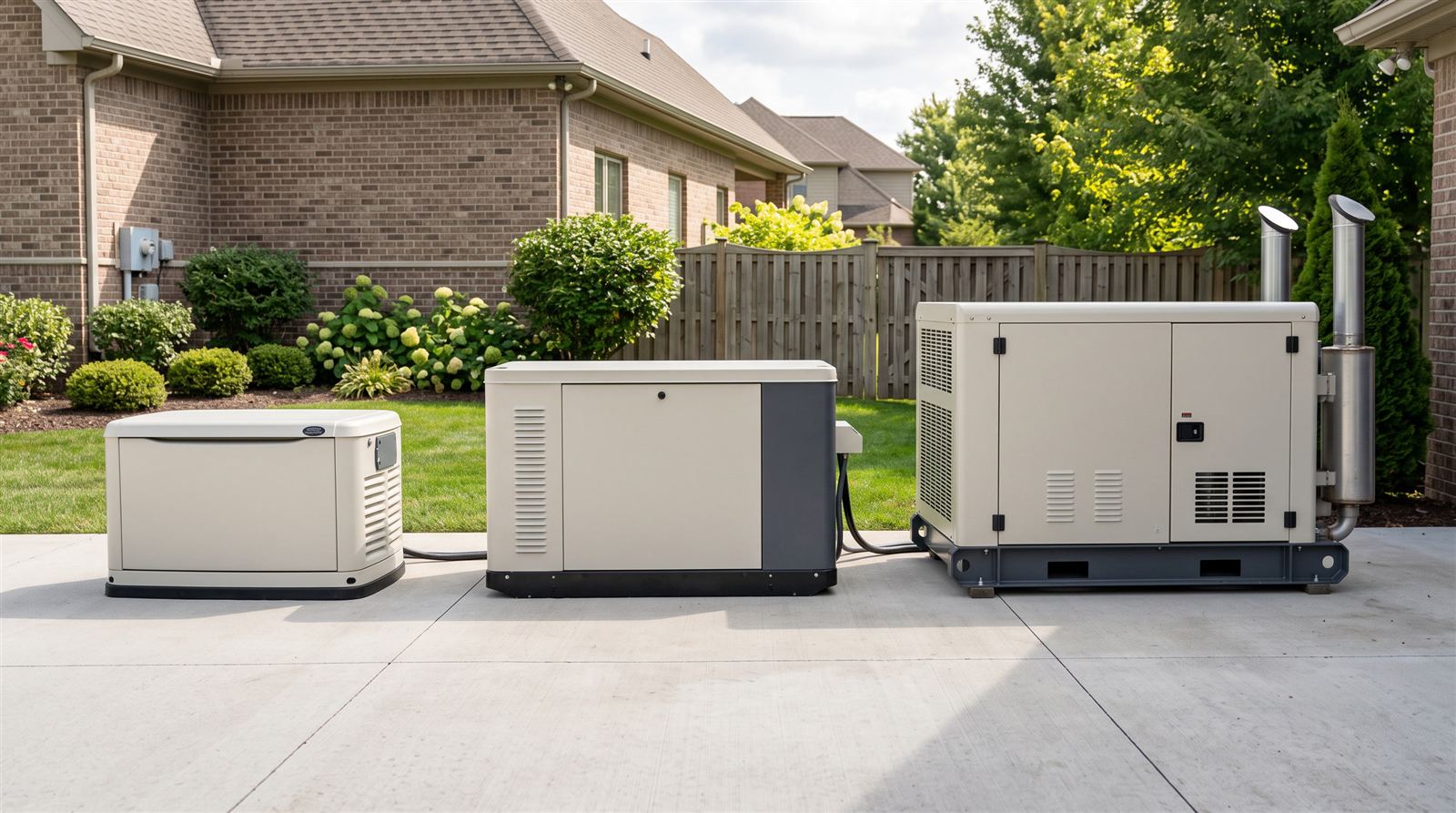
There is no single winner between battery backup systems and gas or propane generators — each technology has fundamentally different strengths, and the better choice depends heavily on your outage patterns, budget, and whether you already have or plan to add solar panels. Understanding the real tradeoffs, rather than treating one as a simple upgrade over the other, is the key to making a decision you will not regret during a multi-day outage.
How the Two Technologies Fundamentally Differ
A gas or propane generator burns fuel to generate electricity on demand and can, in principle, keep running as long as fuel supply lasts, which for natural gas is effectively continuous and for propane depends on tank size and consumption rate. A battery backup system stores a finite amount of pre-charged or solar-charged energy and delivers it until that stored capacity is depleted, at which point it needs to recharge, either from the grid when power returns or from solar panels if installed and if weather allows.
This is the single most important distinction to understand: one technology is limited by fuel supply, the other by stored energy capacity and recharging rate.
Runtime Comparison
| Factor | Gas/Propane Generator | Battery Backup System |
|---|---|---|
| Runtime limit | Fuel supply (often days for propane, longer for natural gas) | Stored capacity, recharges via grid or solar |
| Best for | Extended, multi-day outages | Shorter outages, or longer ones with solar recharging |
| Refueling during outage | Requires propane delivery or intact natural gas service | Requires sunlight (if solar-paired) or utility power to return |
| Predictability | Generally predictable if fuel supply holds | Depends on load and weather if solar-dependent |
For homeowners facing frequent extended outages, particularly in hurricane-prone Gulf Coast areas or regions with an aging grid, a fuel-based generator’s more predictable extended runtime is often a meaningful advantage. For homeowners with mostly shorter outages and strong solar potential, a battery system paired with solar can indefinitely sustain a household’s essential loads as long as there is enough daily sunlight to recharge what was used overnight.
Cost Comparison
Upfront installed cost for a whole-house gas generator typically runs $3,000-$12,000 or more depending on size and site conditions. Whole-home battery systems like Tesla Powerwall and comparable products are often priced in a comparable range for a single unit, but achieving whole-house-equivalent capacity frequently requires multiple battery units, which can push total cost well above a comparably sized generator installation, especially once solar panels are added if not already present. Ongoing costs differ too — generators consume fuel and require periodic professional maintenance, while battery systems have essentially no fuel cost but carry their own service and eventual battery replacement considerations over a longer ownership horizon.
Note: never treat either technology’s advertised pricing as final — request current, itemized quotes for your specific home and desired capacity from local installers of both systems before comparing costs directly.
Noise and Maintenance
Gas generators run an internal combustion engine and produce noticeable mechanical noise and exhaust whenever they operate, along with periodic maintenance needs like oil changes on a schedule defined by the manufacturer. Battery systems operate silently, with no exhaust and no engine to service, which makes them attractive for noise-sensitive properties or homeowners who want to avoid generator noise complaints from neighbors. Battery systems still require professional installation and have their own long-term considerations, including gradual capacity degradation over years of use and eventual replacement.
Reliability During Grid-Wide Disasters
An important nuance: natural gas generators depend on the gas utility remaining operational, and grid-tied recharging for a battery system depends on grid power returning, which means both technologies have a dependency on some external infrastructure staying intact during the most severe disaster scenarios. Propane generators and solar-paired battery systems both offer a path to independence from immediate utility recovery, propane through an on-site fuel tank and solar through daytime recharging, which is worth weighing heavily if you live somewhere prone to prolonged, grid-wide outages.
Can You Use Both?
Some homeowners choose to pair a smaller battery system for quiet, everyday short-outage coverage with a propane or natural gas generator sized for extended, multi-day events, getting the noise and simplicity benefits of a battery for common short outages while retaining the fuel-based generator’s reliable extended runtime for worst-case scenarios. This hybrid approach adds cost but can offer the best of both technologies for homeowners who experience a wide range of outage durations.
Key Takeaways
- Gas and propane generators are limited by fuel supply; battery systems are limited by stored capacity and recharging rate.
- Fuel-based generators generally offer more predictable extended-outage runtime; battery systems shine for shorter outages or when paired with reliable solar recharging.
- Whole-home battery capacity can cost as much as or more than a comparable gas generator installation, especially with added solar.
- Battery systems run silently with no exhaust; gas generators require fuel, produce noise, and need periodic mechanical maintenance.
- A hybrid approach — a smaller battery system plus a fuel generator — is a legitimate option for homeowners facing a wide range of outage durations.
Frequently Asked Questions
Is a battery backup system better than a gas generator?
Neither is universally better — it depends on your outage patterns. Battery systems are strong for shorter outages or when paired with solar recharging, while gas and propane generators generally offer more predictable runtime for extended, multi-day outages.
How long can a battery backup system power a house?
It depends entirely on stored capacity, your household’s actual power draw, and whether solar recharging is available and effective during the outage. Without solar recharging, a battery system will eventually deplete and require grid power to recharge.
Is Tesla Powerwall as reliable as a gas generator during a long outage?
Tesla Powerwall and similar battery systems can sustain a home indefinitely when paired with sufficient solar panel capacity and adequate daily sunlight, but without solar recharging or with prolonged overcast conditions, stored capacity will eventually run out, unlike a fuel generator with adequate fuel supply.
Which option is quieter, a battery system or a gas generator?
Battery backup systems operate silently since there is no combustion engine involved, while gas and propane generators produce noticeable mechanical noise and exhaust whenever they run, which is a meaningful consideration for noise-sensitive neighborhoods.
Can I combine a battery system and a gas generator?
Yes, some homeowners pair a smaller battery system for quiet, everyday short-outage coverage with a fuel-based generator sized for extended events, combining the strengths of both technologies at an additional total cost.