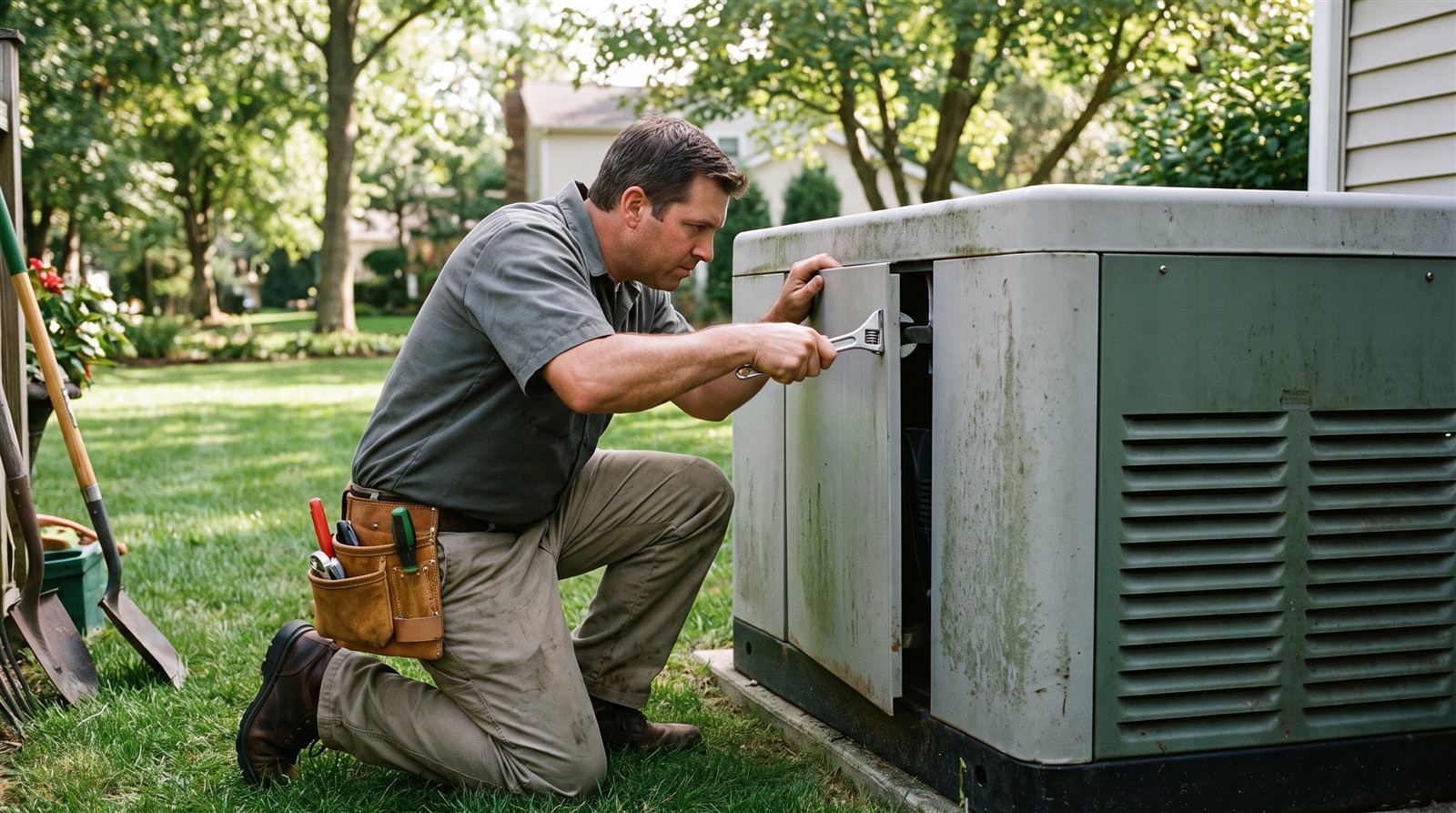
A whole-house standby generator usually gives warning signs before it fails outright, but only if someone is paying attention to them. Because these units sit outside and run only briefly each week for their self-test, it’s easy for early symptoms to go unnoticed until the generator is actually needed during a real outage and doesn’t perform. Knowing what to watch for, and understanding that these are signals to call a professional rather than problems to diagnose yourself, can be the difference between a routine repair and a generator that fails you during a storm.
Fault Codes and Warning Indicators
The most direct signal is also the easiest to miss: a fault or warning code displayed on the generator’s control panel. Modern standby generators are designed to flag developing issues, from low battery voltage to fuel pressure problems to sensor faults, well before they cause an outright failure to start. If you notice a code you don’t recognize, or an app notification if your unit is connected, don’t dismiss it as a false alarm. Write down the exact code and contact your service provider, since the code itself usually points a technician directly to the likely cause.
Changes in the Weekly Self-Test
Because the self-test cycle runs on a predictable schedule, changes in how it sounds or behaves are one of the most useful early indicators available to a homeowner. Signs worth paying attention to include:
- The engine taking noticeably longer to crank and start than it used to.
- A change in exhaust note, idle sound, or vibration compared to previous test cycles.
- The self-test not completing, stopping early, or simply not happening on its scheduled day.
- Visible smoke that’s heavier, darker, or longer-lasting than the brief puff sometimes seen at a cold start.
Any of these, especially a pattern that repeats over a few weeks rather than a one-off, is worth a call to a technician even if the unit seems to “work” on the next test.
Fuel System and Odor Warning Signs
A noticeable fuel odor near the generator, visible fuel staining on or around the unit, or a hissing sound near propane or gas connections are signs that should prompt an immediate call to your fuel supplier or a qualified technician, not a wait-and-see approach. Fuel system issues are a genuine safety concern and are never appropriate for DIY troubleshooting or repair.
Unusual Noise, Vibration, or Physical Changes
Beyond changes during the self-test specifically, keep an eye out for the unit appearing to sit unevenly on its pad, visible rust or corrosion beyond light surface staining, loose panels or covers, or pooling of oil or coolant underneath the unit. These physical signs often indicate something a scheduled maintenance visit alone might not catch between annual appointments, and they’re worth flagging to a technician even outside your normal service schedule.
Battery and Electrical Warning Signs
A battery that needed replacement sooner than expected, a control panel display that seems dim or behaves erratically, or repeated low-battery alerts are electrical-system signs that shouldn’t be ignored. Since the battery is critical to starting the engine at all, an electrical fault here is one of the more common root causes of an outright failure to start during an actual outage, which is exactly the moment you can’t afford it.
When to Call Immediately vs. When to Monitor
Some signs warrant an immediate call: fuel odors, hissing near fuel connections, heavy or continuous smoke, or a fault code specifically related to fuel pressure or safety shutdowns. Other signs, like a slightly longer crank time or a single missed self-test that resumes normally the following week, can reasonably be monitored for a short period and mentioned at your next scheduled service, though persistent or worsening symptoms should move up the priority list regardless of how minor they initially seemed.
Why Early Attention Matters More Than It Seems
Generator repairs caught early, when a technician can address a single failing component, are typically far less involved than repairs made after a small issue is ignored long enough to cascade into a bigger failure, or after the generator fails completely during an outage when it’s actually needed. Beyond cost and convenience, the entire purpose of the equipment is to work reliably during the one moment you can’t easily replace it with anything else, which makes paying attention to early warning signs one of the most practical things a generator owner can do.
Key Takeaways
- Fault codes on the control panel or connected app are a direct signal something needs professional attention; don’t dismiss them.
- Changes in the weekly self-test, longer cranking, unusual noise, or a cycle that doesn’t complete, are often the earliest available warning signs.
- Fuel odors, staining, or hissing near connections require an immediate call to a professional, never DIY troubleshooting.
- Physical changes like uneven positioning, corrosion, or fluid pooling under the unit are worth flagging even outside a scheduled visit.
- Addressing warning signs early is typically far less costly and disruptive than waiting for a full failure during an actual outage.
Frequently Asked Questions
How do I know if a fault code is serious or minor?
Treat any fault code as worth reporting to your service provider, since the significance of a given code depends on your specific model and the underlying cause. Technicians can typically tell you over the phone whether it needs an urgent visit or can wait for your next scheduled service.
Is it normal for the self-test to sound slightly different from week to week?
Minor variation can happen, especially with temperature changes, but a consistent pattern of change, such as progressively longer start times or a new noise that persists across multiple weeks, is worth mentioning to a technician rather than assuming it will resolve on its own.
What should I do if I smell gas or propane near my generator?
Move away from the area, avoid using any switches, phones, or open flames nearby, and contact your fuel supplier or emergency services line, along with your generator service provider. Fuel odors should never be treated as a wait-and-see issue.
Can I keep using my generator if it’s showing a minor warning sign?
It depends entirely on the specific sign and your model, which is exactly why contacting your service provider rather than guessing is the right move. Some warnings indicate a component that’s degrading gradually, while others can indicate a condition where continued operation risks further damage.
How much does a typical generator repair cost?
Repair costs vary widely depending on the specific issue, from a straightforward battery replacement to a more involved fuel system or control board repair. Getting an accurate estimate requires a technician’s diagnosis of your specific generator and symptom, rather than relying on a general cost range.