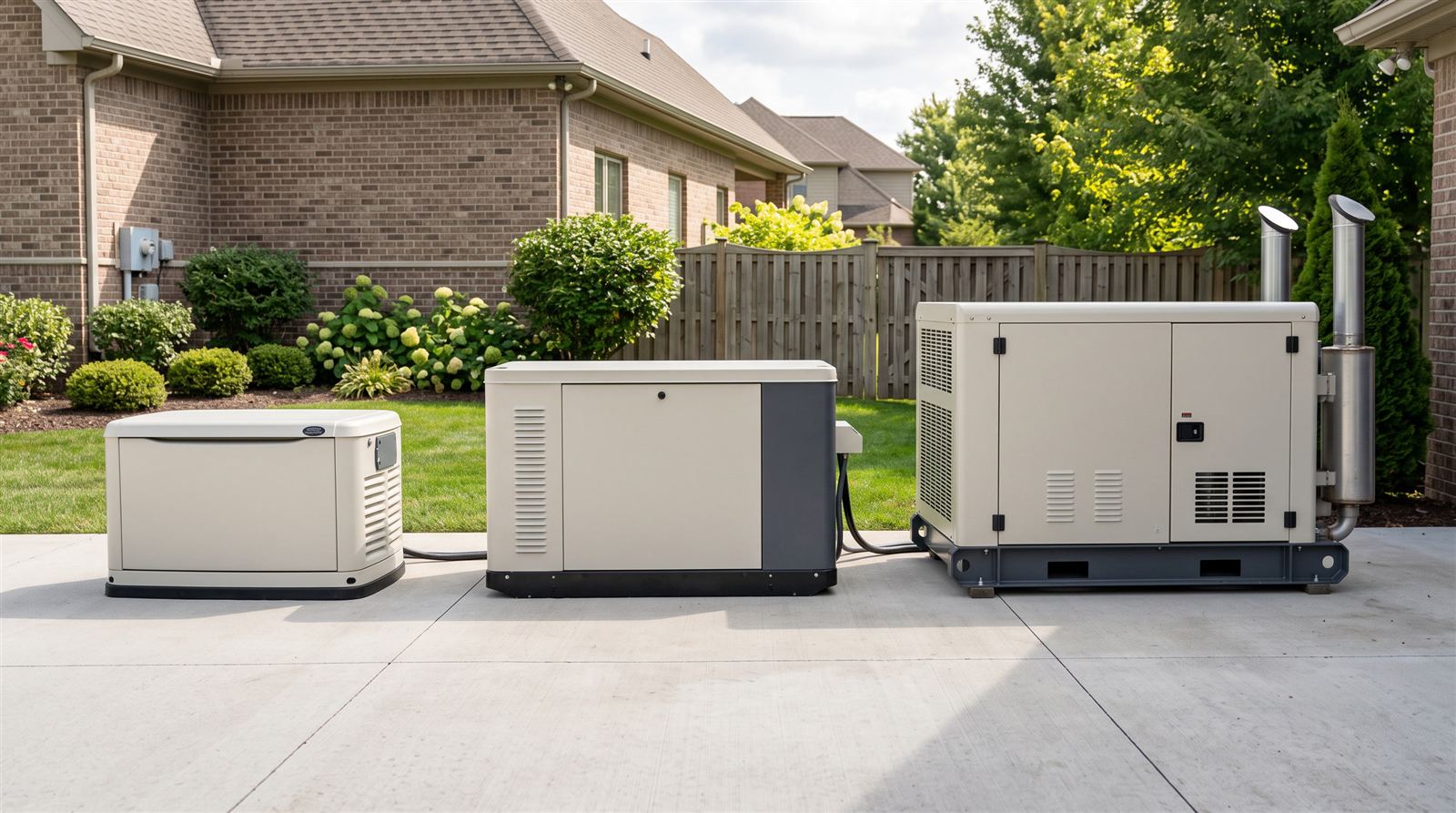
Portable generators and whole-house standby generators are often compared as if they are simply cheaper and more expensive versions of the same product, but they actually solve different problems. A portable generator is a piece of equipment you store, fuel, and manually deploy during an outage, while a standby generator is a permanently installed system that starts itself automatically. Which one you actually need depends on your budget, how often you lose power, and how much manual effort you are willing to take on during an outage.
What a Portable Generator Actually Involves
A portable generator is a gas- or propane-powered unit you store in a garage or shed and wheel out when the power goes out. You manually start it, run heavy-gauge extension cords to individual appliances or connect it through a manual transfer switch and inlet box wired into your panel, and refuel it periodically, typically every several hours depending on load and tank size. Portable units range from small inverter generators suited to a few essential devices up to larger units that can handle a refrigerator, some lighting, and a window air conditioning unit.
The core tradeoff is effort and exposure: you have to be home, awake, and physically able to set it up, and it must run outdoors, away from windows and doors, to avoid deadly carbon monoxide buildup. It offers no protection if an outage happens while you are away or asleep unless someone else starts it for you.
What a Standby Generator Actually Involves
A standby generator is permanently installed outside your home, wired into your electrical panel through an automatic transfer switch, and connected to a natural gas line or a dedicated propane tank. When utility power fails, the transfer switch detects the outage and starts the generator automatically, typically restoring power within seconds, whether or not anyone is home. It also runs a brief self-test on a regular schedule to confirm it is ready.
This automation and permanence come at a significantly higher upfront cost, generally in the range of $3,000 to $12,000 or more installed, compared to a portable unit that can often be purchased for a small fraction of that price. Standby systems also involve professional installation, permits, and periodic professional maintenance rather than simple manual upkeep.
Side-by-Side Comparison
| Factor | Portable Generator | Standby Generator |
|---|---|---|
| Upfront cost | Generally low, off-the-shelf pricing | $3,000-$12,000+ installed |
| Startup | Manual, requires you to be present | Automatic, works while you’re away |
| Power coverage | Select appliances or circuits | Whole house or large essential-circuit set |
| Fuel | Gasoline or propane, manually refueled | Natural gas or propane, continuous or large tank supply |
| Installation | None required (manual transfer switch recommended) | Professional installation, permits, inspection |
| Noise and placement | Must run well away from windows/doors outdoors | Fixed outdoor pad location, still requires clearances |
| Best for | Occasional short outages, tighter budgets | Frequent or extended outages, hands-off protection |
Who Actually Needs a Standby Generator
Homeowners who experience frequent or extended outages — due to storms, an aging local grid, wildfire-related public safety power shutoffs, or hurricane exposure — tend to get the most value from a standby system, especially if anyone in the household depends on powered medical equipment, works from home, or is frequently away when outages could occur. The automatic, whole-house nature of a standby system removes the physical burden and safety risk of manually deploying a portable unit during severe weather.
Who Can Reasonably Stick With a Portable Generator
If your outages are infrequent, brief, and you are comfortable manually setting up equipment when they happen, a portable generator paired with a properly installed manual transfer switch can be a reasonable, lower-cost solution. It is also a sensible starting point for renters, homeowners not ready for a permanent installation, or anyone who wants backup power for a smaller set of essential devices rather than the whole house.
Note: never run a portable generator indoors, in a garage, or near open windows or doors — carbon monoxide poisoning from improperly placed portable generators is a real and well-documented safety risk during outages.
Cost Over Time
While a portable generator has a much lower upfront cost, it also requires more manual fuel purchases over its lifetime, periodic maintenance like oil changes, and eventual replacement, typically sooner than a standby unit’s expected service life. A standby generator’s higher upfront cost is offset over time by lower manual involvement and a longer typical service life when properly maintained, though it also carries its own ongoing maintenance costs, generally including an annual professional service visit.
Key Takeaways
- Portable generators require manual setup and outdoor placement every time they run; standby generators start automatically without you present.
- Standby systems cost significantly more upfront, generally $3,000-$12,000+ installed, versus a much lower cost for a portable unit.
- Standby generators typically cover the whole house or a large set of essential circuits; portable units usually power a smaller, selected set of appliances.
- Frequent or extended outages, medical equipment needs, or being away often favor a standby system; occasional brief outages can be reasonably handled with a well-used portable unit.
- Portable generators must always run outdoors, away from windows and doors, to avoid carbon monoxide poisoning.
Frequently Asked Questions
Can a portable generator power a whole house?
Generally no, not in the way a standby generator does. Larger portable units can power a meaningful set of appliances and circuits, especially when connected through a manual transfer switch, but they are rarely sized or configured to cover full whole-house demand the way a properly sized standby system is.
Is a manual transfer switch necessary for a portable generator?
It is strongly recommended over simply running extension cords, and required by code in many areas if you want to power hardwired circuits. A manual transfer switch, installed by a licensed electrician, lets you safely connect a portable generator to your panel and also prevents dangerous backfeeding into utility lines.
How much cheaper is a portable generator than a standby system?
Portable generators are typically a small fraction of the cost of an installed standby system, though exact pricing depends on size and features. The tradeoff is that a portable unit requires manual setup, fuel management, and offers less coverage than a properly sized standby generator.
Which option is better for frequent hurricane or wildfire outages?
For frequent or extended outages tied to hurricanes, wildfire-related public safety power shutoffs, or an unreliable local grid, a standby generator’s automatic operation and larger fuel capacity generally provide more reliable, lower-effort protection than repeatedly deploying a portable unit.
Do standby generators need less maintenance than portable ones?
Both require regular maintenance, but the nature differs. Standby units typically self-test automatically and need periodic professional service, generally on an annual basis. Portable units require more hands-on owner maintenance, including oil changes and fuel system care, especially if they sit unused for long stretches between outages.